
Teams | Collaboration | Customer Service | Project Management

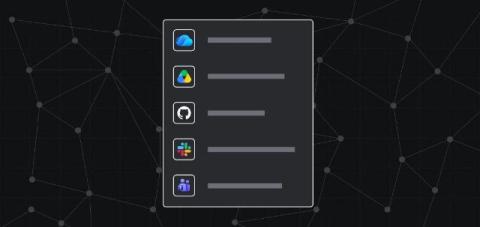
Say yes to AI context without losing control: a new way to set up and govern connectors in Atlassian Administration

Maya runs IT for Beaconstone Financial, a fintech company with 2,000 employees. Her engineering teams work in Jira and GitHub. Sales lives in Salesforce. Most decisions happen in Slack threads, Google Docs, and SharePoint folders that nobody can find six months later. Leadership wants Rovo to answer questions across all of it. Her head of sales has asked for account briefs that pull in the latest Salesforce opportunity data and last week’s customer call.


Zendesk Employee Service AI Agents: They get the work done

Ever feel like getting access to basic software tools takes longer than completing the actual project? You’re not alone. In this episode of Office Confessions, we look at the frustration of slow internal approval processes and how to solve it. With Zendesk Employee Service AI Agents, your team doesn't just get answers to questions — they get real work done fast. Learn how Zendesk can help eliminate internal bottlenecks and empower your employees to move faster.

Your Enterprise Data Shouldn't Go to a Public AI Endpoint #AI #SLM

Bigger AI models aren't always better for business. Here's why enterprise AI is going small. For years, the AI race focused on larger models with more parameters and broader capabilities. But enterprises have different priorities: data privacy, lower inference costs, faster responses, and control over their own infrastructure. Enter Small Language Models (SLMs). In this video, we explore why businesses are considering smaller, specialised AI models and how they could change the way enterprises deploy AI.

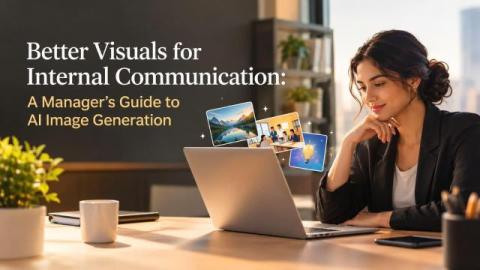
Better Visuals for Internal Communication: A Manager's Guide to AI Image Generation

Every team communicates more than it realises. There are weekly updates, process changes, onboarding guides, event invitations, policy reminders and project announcements. Most of these messages are written quickly and shared in chat channels or email, and many of them are skimmed rather than read. A well-chosen visual can change that. A clear diagram explains a new process faster than three paragraphs, and a friendly header makes a weekly update feel worth opening.

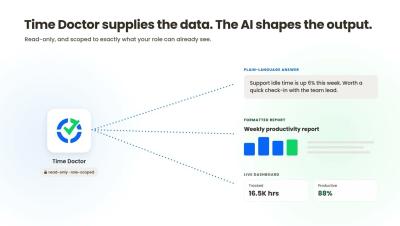
Time Doctor MCP: Analyze Workforce data in Claude, ChatGPT, and Gemini.

Time Doctor, now in Claude, ChatGPT, and Gemini. Ask your workforce data a question instead of exporting a report. In this video, Time Doctor shows how the Time Doctor MCP connects your Time Doctor data to the AI tools your team already uses. Ask about your distributed team in plain language, refine the answer with follow-up questions, and put Time Doctor hours next to your payroll, CRM, and project data in one place, without stitching spreadsheets together.

Context engineering: managing context quality for more efficient, effective AI

In 2025, companies spent a collective $581 billion on AI. The results were underwhelming: according to a study by MIT, 95% of Enterprise AI pilots showed zero impact on organization’s bottom lines. In short, the vast majority of AI pilots are unsuccessful. The reflex is to blame the models. The evidence points somewhere easier to control: context. Every answer AI produces is assembled from a context packet—the material used to respond to the presented prompt.

4 Miro AI Time-Savers Every Designer and UX Pro Should Know

Designers and UX pros spend too much time synthesizing research and mapping flows manually. In this video, we cover four AI-powered time-savers built for design workflows: summarizing user research instantly, turning insights into a structured repository with Miro Tables, visualizing user flows without drawing a single shape, and automating the entire research-to-direction process with Flows. From discovery to design direction. Without the busywork.

What are AI agents? A plain-language guide for teams

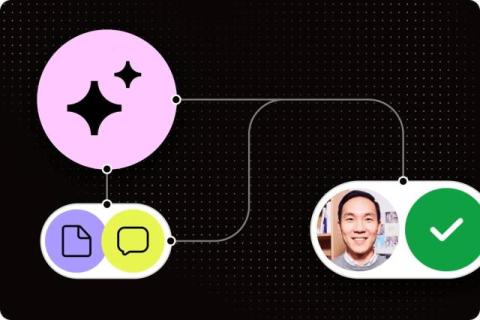
An agent pulls information from your other systems to finish a job, like gathering project updates and drafting a status report for someone to approve. Its permissions determine which actions it can take. This 10-minute guide goes over different types of agents and how they work. It also explores workplace examples and how agents support AI work management.