Tracking token usage won’t help you understand where AI is adding to bottom-line results. Move toward true agentic implementation by measuring what matters.
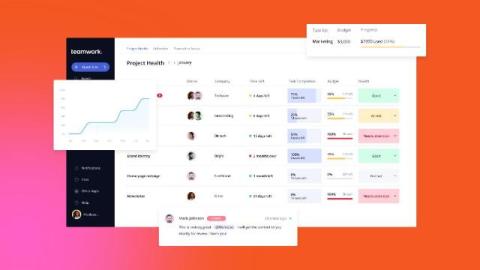
Every professional services team I've been part of has had the same argument at some point: "Why aren't timesheets getting done?" Before I joined Teamwork.com, I spent years managing delivery for agency teams. The answer was always the same. Manual time tracking is painful, so people avoid it. Automated time tracking fixes the root cause by removing the manual work entirely. This guide breaks down how it works, what methods are available, and how to choose an approach that actually sticks with your team.
Most critical infrastructure organizations are running communications on platforms built for the wrong threat model. Commercial SaaS tools were designed for persistent internet connectivity and vendor-managed infrastructure. Neither holds in energy grids, water systems, transport networks, or healthcare environments facing active cyber threats. Secure messaging for critical infrastructure is not a feature upgrade. It is an architectural decision.
Adversaries are capturing encrypted government and defense communications today, intending to decrypt them once quantum computers are powerful enough. This attack is called Store Now, Decrypt Later (SNDL), and it is already confirmed to be happening.
Remote work has moved well past the experimental phase. For millions of teams around the world, distributed collaboration is simply how work gets done now, and the question is no longer whether remote setups can work but which tools make them work best.
Internal communicators don’t need more tools. We need fewer handoffs, less chaos, and more space to do the work that requires our superpowers of context, clarity, and judgment. Internal communications professionals understand the exhausting effort of balancing daily chaos. You might find yourself running three campaigns simultaneously, announcing a critical leadership transition, updating your hybrid work policy, and preparing for a quarterly town hall all at once.
Most enterprise video conferencing platforms claim to be encrypted. The problem is that encryption can mean very different things depending on how a platform is built. For organizations discussing sensitive business, legal, financial, or operational information over video calls, a secure video conferencing platform is crucial. But many platforms advertise security while still retaining the ability to access call content through their infrastructure.
Collaboration tools allow teams to coordinate projects, share information, respond to incidents, and make decisions. But most of these tools aren't secure. As cyber threats increase, employees use consumer messaging apps for work, and regulations such as GDPR, NIS2, and DORA raise compliance expectations, organizations need collaboration tools that protect sensitive communications without slowing teams down.
Every large BPO that has experienced a compliance failure had policies in place. Most had training programmes. Many had recently passed an audit. The documentation existed. The sign-offs were on file. And workforce compliance still broke down.