
Teams | Collaboration | Customer Service | Project Management

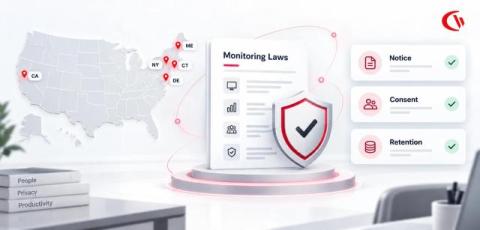
US Workplace Monitoring Laws & Privacy Requirements : A State-by-State Guide

The location from which employees log in remained the same with the introduction of hybrid working; instead, it was the level of visibility that employers believed was necessary and the amount of scrutiny that this visibility drew that changed. In six states, laws require notice and consent for workplace monitoring; in Connecticut, rules became stricter on October 1, and Maine’s new law took effect this July.

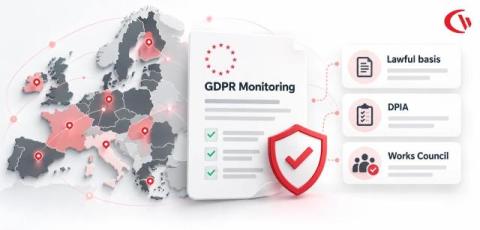
GDPR Compliance in Employee Monitoring Software DPIA & Lawful Bases Guide (2026 Review)

When using employee computer monitoring software across the European Union (EU), companies have to find a balance between two legitimate, yet conflicting, aims: the safeguarding of corporate networks, know-how and confidential data on the one hand, and the preservation of employees’ privacy and fundamental rights on the other.

WhatsApp in Social Care: The Compliance Risk and What Replaces It

It's a familiar story. A social worker gets a message from a client on a Saturday. A family needs to move a home visit. A colleague forwards a photo of a document that has to be dealt with before Monday. None of it goes through an official system. All of it goes through WhatsApp, because that is where the client already is, and because it works.

5 Costly HR Compliance Mistakes Mid-Size Companies Make and How to Avoid Them

As companies grow, HR compliance gets more complicated and small process gaps can turn into expensive problems. Worker classification, multi-state hiring, poor record-keeping, inconsistent policy enforcement, and outdated compliance processes can expose mid-size companies to back pay, overtime claims, penalties, audits, and legal disputes. In this video, we break down 5 of the biggest HR compliance mistakes mid-size companies make and what you can do to avoid them.

Call Recording Compliance Software: a Financial Services Evaluation Guide

Call recording compliance software captures and archives business conversations so regulated organizations can meet their obligations. In reality, what seems simple is often plagued by platform limitations and configuration errors. This guide covers what regulators ask of financial services organizations, what to evaluate in a call recording compliance software vendor, and where recording software fails most often.

HIPAA-Compliant Texting: Rules, Risks & Best Practices

Text messaging has become one of the fastest and most convenient ways for healthcare professionals to communicate, and that speed is exactly why it creates compliance risk. Most consumer apps are not HIPAA-compliant, and texting through those apps creates risks for your organization. But that doesn’t mean you have to skip texting entirely.

Cyber Resilience: Strategy, Frameworks & Compliance [2026]

Every organization will experience cyber disruptions at some point. The difference between companies that recover quickly from cyber attacks and those that face prolonged downtime often comes down to their cyber resilience. In this guide, you'll learn what cyber resilience is, how it differs from cybersecurity, the frameworks and regulations that shape resilience programs, and the practical steps to building a cyber resilience strategy.

What is operational compliance and why it matters for distributed teams

Operational compliance is what a business actually does every day, not what its policy manual says it should do. For a BPO handling customer calls, a BFSI team processing transactions, or a healthcare provider managing patient records, the gap between written policy and daily practice is where real risk lives. Distributed teams widen that gap. When people work from homes, branch offices, and shared desks across time zones, the controls built for one office floor stop working the way they used to.