
Teams | Collaboration | Customer Service | Project Management

Signal Attacks Reveal the Gap Between Securing Messages and Securing Members

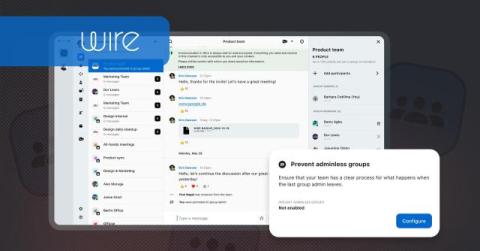
Recently, a spate of successful social engineering attacks on high-value users of the Signal secure messaging tool has raised significant concerns, spawning as many questions as impassioned critiques about how to properly secure communications. A significant challenge is that the field of Internet security is so complex that it makes constructive dialogue difficult, even for modern, digital professionals.

How to Choose Security Compliance Software

Loved our blogs? Find more wAnywhere perspectives on productivity and compliance Set as a preferred Google source Table of Contents Modern businesses face an exploding demand for security and compliance solutions. With the compliance management software market hitting $68.4B in 2026, 81% pursue ISO 27001 and 58% adopt SOC 2 amid rising audits.

The Rise of AI in DevOps & Security: AWS Launches Two Agents

Amazon Web Services has launched two AI agents to investigate production incidents and run penetration tests. The company has “aggressively” priced these agents, according to Forbes senior contributor Janakiram MSV, to challenge the staffing economics of traditional DevOps and security., There are big implications. Teams will now be evaluating whether routine operations should remain manual at all.

What Is Syncjacking and How to Stop It

Syncjacking is a more obscure but still real cybersecurity concern. This attack focuses on the synchronization process, where it actually disrupts or gains the unauthorized access to the data. Anyone wanting to secure details of technology use must understand the methods by which a third party can breach your systems, and sync jacking is an area that is unlikely to gain any limited press attention.

When the Breach Hits, Who Do You Call? Why Wire Partnered with OctopusCRX

There is a scenario that keeps CISOs and executives awake at night. Not the breach itself, but what happens in the minutes and hours after it. “It’s not if a breach happens, but how you respond when it happens.” Primary systems are down. Email is compromised. The collaboration tools your teams rely on every day are either locked or actively under attacker control. And leadership needs to make decisions that will determine how damaging the attack will be. This is what Wire was built for.

How AI Security & Compliance Tools Prevent Data Breaches in Real Time

Loved our blogs? Find more wAnywhere perspectives on productivity and compliance Set as a preferred Google source Table of Contents In an era where every keystroke can become a vulnerability, a single data breach can cost an organization close to $5 million on average, as IBM’s Cost of a Data Breach Report 2024 reveals.

Get to Know the Wire Integrations SDK

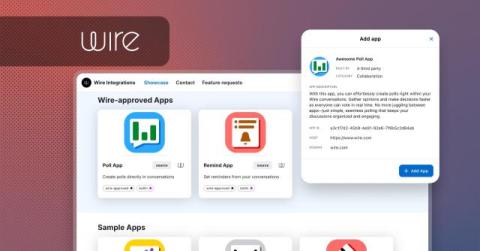
The Wire Integrations SDK is built for developers who want to extend Wire without compromising its security model. Unlike traditional bot platforms, Wire Apps are cryptographic participants in the conversation, they operate with the same end-to-end MLS encryption as any human user. This guide covers the key concepts you need to build confidently on the platform.

The New Wire Integrations SDK: A New Foundation for Secure Collaboration Ecosystems

Modern collaboration software has evolved along two primary architectural paths. On one side are mainstream collaboration platforms that prioritize extensibility and integration but rely on centralized trust models. On the other are secure messaging applications that implement end-to-end encryption (E2EE), typically designed as closed communication systems rather than extensible development platforms.

Why Most Businesses Make Internal Theft Easy (And How to Stop It)

No employer wants to think that one of their employees would intentionally do the business harm, but studies show it’s more common than you might expect. Indeed, it’s so common that the primary threat to businesses isn’t strangers, but those in their employment, with research suggesting that internal theft occurs around 5 - 7 times more than external crime. That information isn’t designed to scare you.

End-to-end encryption for government: what decision-makers need to know

‍For EU government organizations and critical infrastructure operators, end-to-end encryption is no longer an architectural choice — it is a regulatory obligation. NIS2, which came into force across EU member states in October 2024, explicitly requires essential and important entities to implement encryption as part of their cybersecurity risk management measures. GDPR Article 32 has required encryption of personal data since 2018.