
Teams | Collaboration | Customer Service | Project Management

SDK Apps Are Now Live in Production on Wire

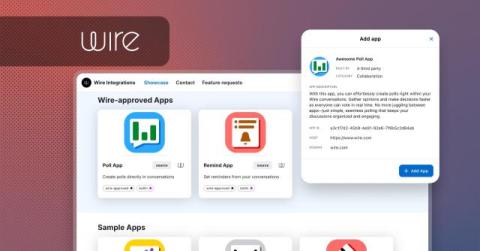
A few weeks ago, we soft-launched the Wire Integrations SDK in Staging and called it Phase 1 - the foundation. Today, we're taking the next step. Phase 2 brings the SDK to production in Wire, and with it, Apps become a properly typed, properly visible part of Wire. With this release, Wire becomes a place where automation lives natively: secure by design, end-to-end encrypted, and built on the protocols our customers trust with their most sensitive conversations. Here's what shipping.

Signal Attacks Reveal the Gap Between Securing Messages and Securing Members

Recently, a spate of successful social engineering attacks on high-value users of the Signal secure messaging tool has raised significant concerns, spawning as many questions as impassioned critiques about how to properly secure communications. A significant challenge is that the field of Internet security is so complex that it makes constructive dialogue difficult, even for modern, digital professionals.

When the Breach Hits, Who Do You Call? Why Wire Partnered with OctopusCRX

There is a scenario that keeps CISOs and executives awake at night. Not the breach itself, but what happens in the minutes and hours after it. “It’s not if a breach happens, but how you respond when it happens.” Primary systems are down. Email is compromised. The collaboration tools your teams rely on every day are either locked or actively under attacker control. And leadership needs to make decisions that will determine how damaging the attack will be. This is what Wire was built for.

Get to Know the Wire Integrations SDK

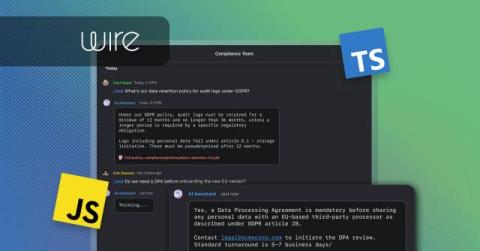
The Wire Integrations SDK is built for developers who want to extend Wire without compromising its security model. Unlike traditional bot platforms, Wire Apps are cryptographic participants in the conversation, they operate with the same end-to-end MLS encryption as any human user. This guide covers the key concepts you need to build confidently on the platform.

The New Wire Integrations SDK: A New Foundation for Secure Collaboration Ecosystems

Modern collaboration software has evolved along two primary architectural paths. On one side are mainstream collaboration platforms that prioritize extensibility and integration but rely on centralized trust models. On the other are secure messaging applications that implement end-to-end encryption (E2EE), typically designed as closed communication systems rather than extensible development platforms.

Digital Sovereignty in Action: Wire Hosts European Leaders in Brussels

Brussels recently brought together policymakers, cybersecurity experts and industry leaders for a focused discussion on Europe’s digital future. At the center of the conversation was a clear theme: Europe must build its own secure, interoperable and values-driven digital ecosystem rather than replicate Silicon Valley models. Wire hosted the event to create space for an open exchange on digital sovereignty, secure communication and Europe’s responsibility to protect democratic infrastructure.

Wire Uncut Ep. 9 | EU Tech map Interview | "Europe Isn't Behind in Tech"

What if Europe isn’t behind in tech but simply underexposed? In this episode of Wire Uncut, we speak with Dante Emilio Grassi, founder of EU Tech Map, a platform that started as a hobby project and quickly became a movement across LinkedIn and the European tech ecosystem. In just one week, EU Tech Map grew to 1,500+ companies across 77 categories and 44 countries. But beyond the numbers, this conversation explores something bigger: visibility, digital sovereignty, and why European companies often default to non-European software.

From Secure Messaging to Secure Workspace: Meet Wire Drive

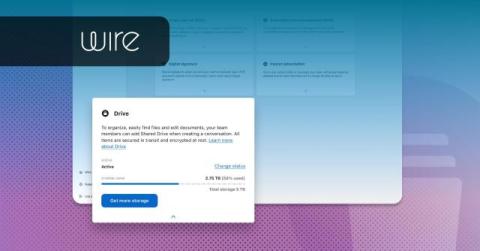
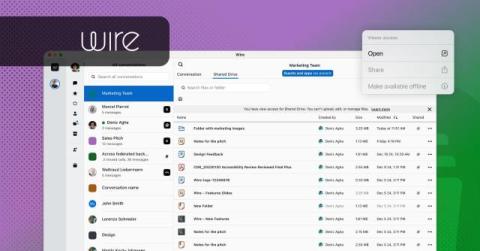
Wire Drive, now available on Wire Cloud, brings integrated file management and real-time document collaboration to Wire Messenger. It reduces app-switching, boosts team productivity, and simplifies access control—directly within the context of secure group messaging and conferencing.

Encryption, Authority and Control: What the BitLocker Case Reveals About Enterprise Risk

Recent reporting confirmed that Microsoft provided BitLocker recovery keys to law enforcement in response to a valid court order. The case itself follows established legal procedures, yet it highlights a structural reality that many organizations are still evaluating: when encryption keys are stored with a provider, access is technically and legally possible under that provider’s jurisdiction. This is not a question of intent. It is a question of architecture, authority and control.

Wire Expands in the Middle East to Strengthen Sovereign Digital Communication

Wire has expanded its presence in the Middle East to meet the growing demand for sovereign, resilient digital communication infrastructure, which has increased by 200% across the region. Governments, regulated industries, and major enterprises in the Middle East now treat digital infrastructure as strategic national infrastructure.