Teams | Collaboration | Customer Service | Project Management

What Is Cloud Sovereignty? A Guide for European Enterprises

US based hyperscalers continue to dominate digital infrastructure worldwide. Yet across Europe, there is a growing movement to protect data from both cyber threats and extraterritorial laws, and to ensure full regulatory compliance. Cloud sovereignty has become a cornerstone of this effort. Cloud sovereignty ensures that data, workloads, operations, and digital infrastructure remain under the jurisdictional control of the country or region where they reside. It goes beyond simple data residency.

Unbundling Dependence: Why the EU's Teams Breakup Is a Broader WakeUp Call

Microsoft’s forced unbundling of Teams in the EU is more than an antitrust event. It's a reminder that enterprises must carefully deconstruct how they build dependence on platforms that mix sensitive and non-sensitive workloads, especially those outside sovereign control. The key lesson: separating sensitive from public-facing communications, and sovereign from non-sovereign platforms, is now a strategic imperative.

When Compliance Comes Late: Why Microsoft's EU Deal Shows That Non-Compliance Still Pays Off

The Commission’s compliance is not just a Microsoft win—it’s a signal to all European institutions and businesses. To meet EU rules, the Commission had to enforce strict limits on data transfers, improve contractual safeguards, and guarantee that data processing takes place within the European Economic Area wherever possible.

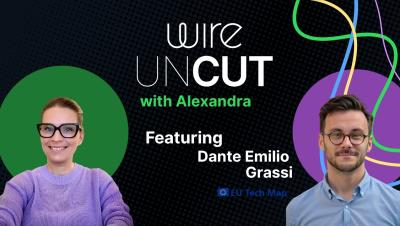
Wire Uncut Ep.6 | XWiki | Open Source Tools for Knowledge and Privacy

In this episode of Wire Uncut, Alexandra speaks with Dan, Director of Marketing and Communication at XWiki, about the company’s journey as a European Libre Software provider. Dan shares how XWiki and CryptPad deliver secure, open source tools for collaboration and knowledge management. From powering corporate intranets and documentation hubs to enabling encrypted real-time teamwork, XWiki’s mission is to strengthen digital sovereignty in Europe.

From AI to Remote Security: 5 Tools That Future-Proof Team Messaging

By 2025, over 70% professionals will work remotely at least part-time, and most of them use digital collaboration tools and communication platforms to navigate their work every day. However, managing a remote or hybrid workforce has gotten more challenging, thanks to rising cyber threats and the promise and perils of quantum computing and AI, and future-proofing your team’s messaging strategy and ecosystem.

A Talk with XWiki on the Importance of Open Source in Digital Sovereignty

Open source is becoming central to Europe’s digital strategy as organizations look for alternatives that respect privacy and sovereignty. XWiki and CryptPad are not new names in the European tech space. Both are open source platforms with roots going back over 20 years. Headquartered in Paris, the company behind them has grown from community-driven projects into widely used tools across industries and governments.

Open Source From Misunderstood to Europe's Future #podcast #digitalsovereignty #opensource

Is open source really harder to use or integrate? That perception is fading fast. Open source is now recognized for: Technical strength, transparency & interoperability Faster innovation through global collaboration A collective European alternative to Big Tech With initiatives like Eurostack, open source alliances are creating integrated, secure, and competitive solutions for Europe’s digital sovereignty.

OpenDesk Europe's Open Source Alternative to Office 365 #digitalsovereignty #podcast #opensource

Imagine a 100% open source, secure, and privacy-first alternative to Microsoft Office 365. That’s exactly what the OpenDesk Project is building — designed for German public administration and powered by: XWiki, Nextcloud, Collabora Office, Element, OpenProject & more Decentralized, secure, and transparent solutions Partnerships across Europe to strengthen digital sovereignty This is Europe’s collective answer to Big Tech — and it’s already happening.