


|
By Shiv Kapoor
A due diligence project is a structured review of a company, vendor, or partner before a major decision. Teams organize this background research at scale by doing four things: agreeing on scope first, splitting the work into owned workstreams, storing every piece of evidence in one consistent structure, and tracking risks and open questions in a shared workspace instead of scattered emails.

|
By Shiv Kapoor
Data-heavy research projects can involve large datasets, multiple researchers, several review stages, and changing requirements. Effective management uses clear progress tracking to stay aligned. Without a clear way to track progress, teams can lose sight of what has been completed. Moreover, they may miss upcoming tasks and deadlines. For data-heavy research projects, researchers ask how to track work with milestones.

|
By Shiv Kapoor
Every workplace has a story like this: a freelancer disappears mid-contract, an employee quits without much notice, or someone just goes on leave for two weeks, and by the time they’re back, nobody remembers what half the files mean. Projects rarely fail because of bad ideas or sloppy execution. They fail because the knowledge was sitting in one person’s head, and that person walked out the door with it.

|
By Shiv Kapoor
Something changed over the last year that most teams have not fully adjusted to yet. A year ago, one person on the team was often “the one using AI.” Today, almost everyone is. Designers have assistants. Engineers use Claude, Cursor, or both. Product teams run research through ChatGPT or Gemini. Marketing teams use AI to draft campaigns, and support teams use it to summarize issues and prepare responses. Individually, people are producing more than they were a year ago.

|
By Shiv Kapoor
Managing contractors through disconnected spreadsheets, emails, payroll platforms, and project tools creates avoidable operational gaps. Onboarding requirements vary between departments, important documents become difficult to locate, and contractors may begin work without clear responsibilities, deadlines, or project context. Managers are also left without a reliable view of contractor availability, logged hours, costs, outstanding approvals, and delivery risks.

|
By Jeffrey Kagan
Teams are often busy, but that doesn’t always mean work is moving forward. Delays caused by unclear priorities, repeated approvals, manual status updates, and scattered communication can slow even the best projects. Lean project management helps teams deliver more value by removing the work that doesn’t contribute to the final outcome. Instead of asking people to work faster, it focuses on improving workflow, reducing waste, and making project delivery more predictable.

|
By Jeffrey Kagan
Search for “automatic project progress tracking software” and you’ll find dozens of tools promising the same thing. Most of them don’t deliver. Some still require teams to manually update project percentages every week. Others only track completed tasks and leave milestone reporting to project managers. A few show polished progress bars, but behind the scenes, someone still has to maintain everything manually. That usually works for a while.

|
By Luke Henderson
You open your project tracker and see a milestone marked as 60% complete. The problem is that nobody remembers why it’s 60%. That number was updated three weeks ago. Since then, several tasks have been completed, priorities have shifted, and the team has moved on to other work. Yet the progress percentage hasn’t changed because someone has to update it manually. This happens in more projects than most teams admit.
|
By Shiv Kapoor
Timeline approved. Tasks are assigned. The team knows what needs to happen next. But then a designer gets pulled into another launch, a developer has three critical tasks due in the same week, the project manager realizes QA was never properly accounted for, and the deadline that once looked realistic starts to slip. Most deadline problems build quietly when teams commit to more work than they can realistically complete – that’s where project capacity planning comes in.

|
By Jeffrey Kagan
ClickUp is one of the most popular project management tools in the world. It’s flexible, packed with features, and built to replace multiple apps like Trello, Asana, Notion, and even Google Docs. But here’s what many teams realise after using it for a few weeks: ClickUp pricing looks affordable at first, but it becomes expensive once you factor in AI add-ons, usage limits, and scaling costs.
|
By Nifty
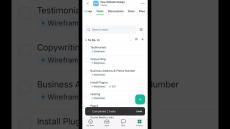
@icehounddigital breaks down how he uses NiftyPM to manage marketing and web development projects via the brand new Nifty mobile app, complete with Statuses, Tasks, Subtasks, and more!
|
By Nifty
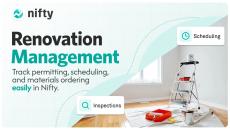
Manage renovation and constuction in one organized workflow with Nifty. In this walkthrough, we show how teams can use Nifty to renovation projects across properties, assign work, set due dates, manage contractors, track material orders, and consolidate documents in a single place. The template shown in this video is ready to use, so you can start with the same workflow instead of building it from scratch.
|
By Nifty
Nifty makes it easy to manage all of your different jobs at scale with transparency and organization.
Best property management software? #rentalproperty #rentalincome #rentalsoftware #propertyinvestment
|
By Nifty
Manage all of your rental properties for as low as $10/mo with Nifty.

|
By Nifty
Manage property maintenance requests in one organized workflow with Nifty. In this walkthrough, we show how property managers and real estate teams can use Nifty to track maintenance requests across properties, assign work, set due dates, manage contractors, and keep everything visible in one place. The template shown in this video is ready to use, so you can start with the same workflow instead of building it from scratch.
|
By Nifty
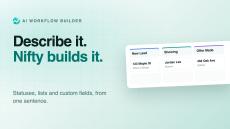
Describe the work you manage and Nifty builds the project around it: the statuses, the lists, and custom fields already set to the right type. In this video we build a real project from a single sentence, walk through the preview, and change everything before creating it. What's covered Why it is useful Setting up a project usually means renaming columns, adding lists, creating the fields you need, then remembering the one you forgot. This does that part for you, and nothing is committed until you press Create Project. Everything stays editable afterwards.
|
By Nifty
In this video, we review how to build custom project reports based on the three different data sets and various chart types Nifty offers.

|
By Nifty
Nifty's AI Templates allow you to generate project structures with just a few keywords or complete specifications documents. You're able to preview and the template before creating the project, or generate an entirely new template with the same (or similar) keywords.
|
By Nifty
With Nifty Goals, you can create trackable goals that are seamlessly integrated with your work. Our powerful goal tracking system allows you to track the progress of company, team, or individual objectives with ease. Say goodbye to manual tracking and hello to clear timelines, measurable targets, and automatic progress tracking.

|
By Nifty
The Nifty 3.5 Webinar covered some of the key updates of the 3.5 release, such as: This is followed by a Q&A session from some attendees.
- October 2026 (3)
- September 2026 (4)
- August 2026 (3)
- July 2026 (2)
- June 2026 (2)
- May 2026 (3)
- April 2026 (3)
- March 2026 (2)
- February 2026 (2)
- January 2026 (2)
- December 2025 (4)
- November 2025 (3)
- October 2025 (3)
- September 2025 (2)
- August 2025 (6)
- July 2025 (1)
- June 2025 (2)
- May 2025 (4)
- April 2025 (3)
- March 2025 (1)
- February 2025 (9)
- January 2025 (6)
- December 2024 (10)
- November 2024 (5)
- October 2024 (5)
- September 2024 (7)
- August 2024 (7)
- July 2024 (9)
- June 2024 (5)
- May 2024 (4)
- April 2024 (5)
- March 2024 (2)
- February 2024 (5)
- January 2024 (3)
- December 2023 (4)
- November 2023 (6)
- October 2023 (4)
- September 2023 (2)
- August 2023 (4)
- July 2023 (3)
- June 2023 (11)
- May 2023 (10)
- April 2023 (12)
- March 2023 (12)
- February 2023 (7)
- January 2023 (5)
- December 2022 (8)
- November 2022 (11)
- October 2022 (10)
- September 2022 (6)
- August 2022 (9)
- July 2022 (7)
- June 2022 (7)
- May 2022 (7)
- April 2022 (7)
- March 2022 (9)
- February 2022 (8)
- December 2021 (6)
- November 2021 (12)
- October 2021 (13)
- September 2021 (8)
- August 2021 (10)
- July 2021 (10)
- June 2021 (8)
- May 2021 (5)
- April 2021 (3)
- March 2021 (4)
- February 2021 (6)
- January 2021 (6)
- December 2020 (4)
- November 2020 (4)
- September 2020 (6)
- August 2020 (3)
- July 2020 (5)
- June 2020 (1)
- May 2020 (2)
- March 2020 (1)
- February 2020 (1)
- July 2019 (1)
Nifty helps teams' simplify their workflow by consolidating team communication, project management, and client collaboration into one easy, fun, and efficient tool.
Create a clear plan of action for your projects and automate your progress tracking:
- Set goals & timelines: Milestones set a timeline for project sprints and deliverables to create alignment. Their progress is automated as associated tasks are completed.
- Collaborate on tasks: Tasks enable you to flexibly organize, prioritize, and manage daily work with a high level of detail in list or kanban-style views.
- Establish knowledge hub: Discussions empower all project members to share ideas, finalize specifications, and gather feedback in real-time.
- Create docs & notes: Create beautiful docs, notes, and wikis for your projects and share with anyone. Nifty even integrates natively with Google Docs.
- Balance workloads: Access automated progress reporting across all your projects and teammate activities with Nifty's Project and Team Overviews to ensure operational clarity.
Manage projects, tasks, and communications in one place.