
Teams | Collaboration | Customer Service | Project Management

6 Best Hands-On Labs for Training and Enablement in 2026

Organizations invest heavily in training content, onboarding programs, certifications, documentation, webinars, and learning management systems. Yet many still struggle with a common problem: learners understand concepts but lack confidence when it comes to applying them. This challenge affects far more than employee training. Customer onboarding teams encounter it when introducing new platforms. Partner enablement teams face it when helping resellers understand products. Sales engineers experience it when prospects want proof that a solution can actually solve their problems.

How one researcher cut competitive analysis from days to hours with AI Teammates

When a competitive tear-down request comes in, Lizzy Munro doesn't start by opening a spreadsheet. First, she needs to understand the landscape: what competitors are offering, how they're positioning it, and where Asana can stand apart. That means combing through competitor websites, analyst reports, and past research, sometimes across eight or more brands, each with 30-plus data points.

How to Build a No-Code AI Agent for IT Teams in 5 Minutes (No Coding Required)

What if your IT team could automate password resets, account unlocks, ticket creation, and employee support without writing a single line of code? In this video, you'll learn how to build an AI Agent for IT in just 5 minutes using Workativ AI Agent Studio. According to Moveworks, AI can handle up to 80% of IT support work while reducing resolution times by 25–40%. Instead of spending hours on repetitive requests, IT teams can use AI Agents to provide instant support, automate workflows, and resolve issues faster.

A streamlined Task Details experience, shaped by your feedback

We're always looking for ways to make the work you do in Teamwork.com feel simpler. Over the past year, one theme that has consistently appeared in customer conversations, product research, and your direct feedback? Task Details—one of the most heavily used areas of Teamwork.com—can sometimes feel busy, overwhelming, and maybe even a little cluttered at times.

Here's what 33 students taught me about the future of product development

If you want to get a feel for the future of product development, one of the best places to look is NYU Stern’s Tech MBA program. This is where the next generation of PMs cut their teeth, so a few months ago we reached out to one of the program’s lead professors with a question: What if we pointed the students at some of the biggest problems in New York — from grocery prices and transit equity to bike lane safety and childcare — and gave them one day to build a solution that worked?

New knowledge connectors: Unify external knowledge for more accurate resolutions | What's New

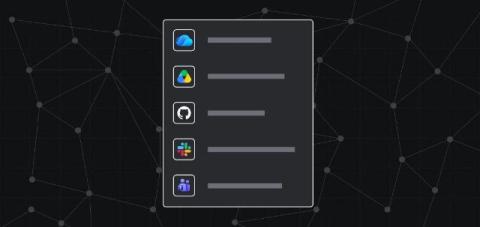
Knowledge connectors bring external content from tools like Confluence, SharePoint, Notion, Google Drive, websites, and more into Zendesk so AI agents and support teams can deliver faster, more accurate resolutions. When knowledge lives across disconnected systems, customers wait longer for answers and agents spend more time searching for information. Zendesk unifies external knowledge into one connected source of truth that powers self-service, AI responses, and support workflows — without complex integrations or custom coding.

Why internal communications is becoming the critical function in your AI rollout

Internal communications teams are being pulled into enterprise AI strategy at a scale the org chart doesn’t reflect. They’re shaping rollout plans, building adoption workstreams, and managing the human side of AI implementation — on top of their existing responsibilities.

Assign Tasks to Roles: Plan before assignment is finalized

Project planning rarely starts with task assignment locked in. You know the work that needs to happen, but the exact people? That often comes later. Until now, tasks in Teamwork.com required you to assign work to a specific user or team from the start. That created friction during early-stage planning, especially when task assignment decisions were still evolving.

Productivity benchmarks: What good performance looks like

Most teams track productivity. Few know what good actually looks like. Measuring productivity is easy. Understanding it is harder. Hours logged, tasks completed, revenue per head — these numbers only tell you so much. Without context, you can not tell if your team is performing well or just staying busy. That is where productivity benchmarks come in. They give you a reference point so performance data actually means something.