

Teams | Collaboration | Customer Service | Project Management

Marketing agency software: 15 tools your agency actually needs

Most marketing agencies don't have a tool problem. They have a "too many tools" problem. I've seen it over and over across Teamwork.com customers. An agency starts with a project management app, bolts on a time tracker, and adds a separate invoicing tool. Then nobody can tell whether a retainer is profitable until the quarter ends. According to Teamwork.com's Sprint to AI Report, 58% of professional services teams juggle three to five separate tools just to manage their work.

The best marketing project management software to run campaigns without the chaos

I've spent the better part of a decade managing marketing campaigns for agency clients, and here's what I know for sure: the tool you pick to manage that work matters more than most people think. Pick the wrong one and you're duct-taping spreadsheets to Slack threads. Pick the right one and your team actually ships work on time, on budget, and without the 11 p.m. "where's that deliverable?" panic.

10 best campaign management software for marketing teams

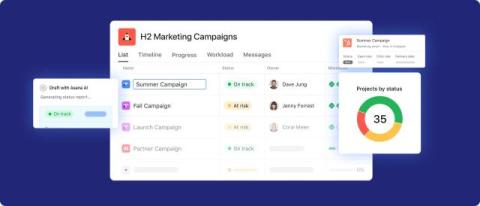
Campaign management software helps marketing teams plan, organize, and track campaigns from one shared workspace. Instead of relying on email threads, spreadsheets, and one-off status updates, teams can use campaign management tools to assign work, set deadlines, manage approvals, and track progress. The right software also helps marketers manage the many details involved in modern campaigns, from social posts and email sequences to paid ads, content assets, and product launches.

From Ideation to Promotion: The Psychology of Selling Digital Products

Selling digital products may sound easy. But with today's competitive online market, selling your products online means more than just putting your offers out there. Aligning your business with the psychology behind achieving high sales can improve your chances of success. To better understand how psychology shapes successful sales, let's explore seven key psychological principles that can turn your ideas into consistent and long-term sales.

The Complete Guide to AI Funnel Builders: What They Are and How They Work

Marketing funnels have changed dramatically over the past decade. What once required months of manual setup and constant tweaking now takes days or even hours. The reason? AI funnel builders. These tools combine automation with data analysis to help businesses create sales funnels faster and with better results. Let's break down what they are, why they matter, and how to choose the right one for your needs.

How to Use AI in Customer Messaging Workflows

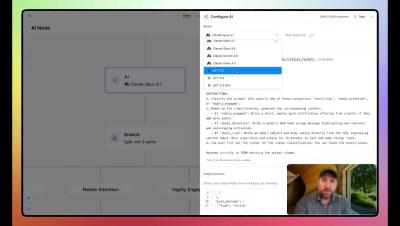
See how AI can use customer context to personalize messages, route users through different paths, and generate structured outputs for downstream workflow steps. In this demo, we show how to add an AI step to a customer messaging workflow, use profile and event data as context, define the expected output, test the response, and use the result to personalize what happens next. What you’ll see.

Sales and marketing alignment needs a live view, not a better process

Ask any sales leader whether marketing leads are any good (and I’ve had a lot of those conversations), then ask marketing whether sales follows up quickly enough. You will get two very different answers - and both teams will be right. According to HubSpot's 2024 State of Sales Report, sales professionals at aligned companies are 103% more likely to beat their goals than those at misaligned ones. Yet only 30% of sales professionals say their teams are strongly aligned.

Slack School | Slackbot for Marketing Campaigns

Spoiler alert: You don't have to enter data manually to build an effective marketing campaign anymore. That's what Slackbot is for. It can automatically identify the right customers from Salesforce and prep personalized email drafts in a canvas for you. In this episode, we'll show you how to transform your data into a targeted marketing campaign without leaving Slack. Class dismissed!

How High-Performing Teams Turn Leads Into Long-Term Customers

In many organizations, lead generation and customer relationships are treated as separate functions. Marketing focuses on attracting attention, while sales teams are expected to convert that attention into revenue. In practice, however, the most successful companies understand that these processes are deeply interconnected. A lead is not simply a data point, it represents a potential relationship. How that relationship is handled from the first interaction often determines whether it develops into long-term value or disappears after a single touchpoint.

The 10 Steps Marketing Project Management Framework

Marketing doesn’t usually fail because of bad ideas. It fails because things slip. A campaign starts strong, then quietly loses momentum. Deadlines move. Ownership gets blurry. One channel launches, another doesn’t. The landing page is ready but the email isn’t. Or worse, everything ships, but nobody knows whether it worked or not. Most marketing teams don’t need more tools. They need a better way to run work.