Choosing between cloud and on-premises time tracking? Compare cost, security, data residency, and IT capacity to find the deployment that fits your team.
Six of the vendors behind openDesk, including Element, have formed Open Productivity: a joint venture that brings the sovereign digital workplace to businesses and critical infrastructure operators. openDesk was created for German public administration. It brings together established open source applications for documents, email, calendars, file sharing, knowledge management and secure real-time communications into a single sovereign workplace suite.
A due diligence project is a structured review of a company, vendor, or partner before a major decision. Teams organize this background research at scale by doing four things: agreeing on scope first, splitting the work into owned workstreams, storing every piece of evidence in one consistent structure, and tracking risks and open questions in a shared workspace instead of scattered emails.
Your delivery team looks fully loaded. Timesheets come in complete. Projects are running. Nobody is sitting idle. Then the month closes, and the margin on a client project lands below plan. Nothing obvious went wrong. The team worked hard. The client got the work. Still, the numbers do not match the effort. This happens because a full day and a billable day are two different things.
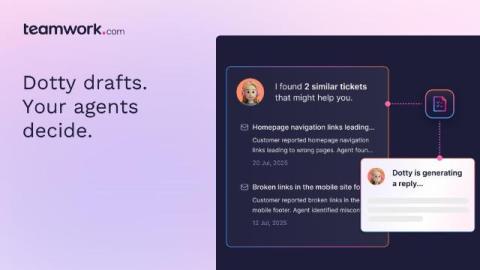
Every ticket your team closes today makes the next one a little easier. That's not a metaphor, it's literally how Dotty works. Dotty is the AI Teammate built into Teamwork Desk. It drafts replies from your help docs and resolved tickets, surfaces the ticket that already solved this exact problem, and summarizes hand-offs so context isn't lost. Your agents review and send: nothing goes out untouched. But the real story isn't any one of those skills. It's what they're building together.
The quotes that hurt in my agency years weren't the ones we lost. They were the ones we won, priced fast from a blended rate and a gut feel on hours, then underwater a few weeks into delivery. I work at Teamwork.com now, after nearly a decade in agencies. Back then, quoting lived in spreadsheets next to a basic timer, so no quote ever saw what the team actually cost. Most guides judge quoting software on how fast and how good a quote looks.
Before I joined Teamwork.com, I spent years running delivery in agencies. Most switches I saw started with the right complaint and the wrong cure: Wrike felt heavy, so teams moved somewhere lighter. Adoption jumped, but by the next quarterly review nobody could say which projects had made money. That gap is common. When Teamwork.com's The Sprint to AI report asked senior leaders at client service firms where their tools fall short, 38% cited profitability management.