
Teams | Collaboration | Customer Service | Project Management

Workforce Scheduling

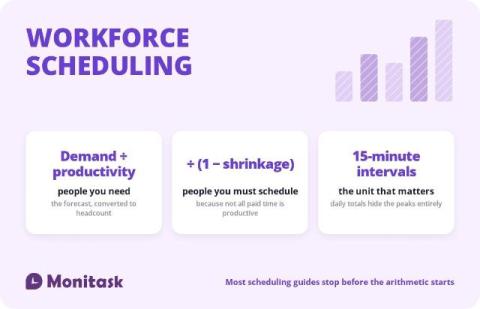
Workforce scheduling is the process of matching staffing to demand across time, within a labour budget and whatever rules apply to your workforce. Every article on the subject agrees on that definition, lists the same components, and then moves to software. The part that decides whether a schedule works is quantitative, and three numbers do most of the work: Miss the second one and you will be understaffed by roughly a quarter every single week while your headcount looks correct on paper.

How ARM Creative runs full-service marketing campaigns with Asana AI

At ARM Creative, a single campaign can span broadcast TV, over-the-top (OTT) ads, radio, Spotify, paid social, display, and retargeting—all running at once, each with its own deadlines, specs, and approvals. It used to be that campaign updates lived in email threads, while feedback was scattered across Slack and inboxes. Without a shared system, it was difficult to see whether a deliverable was approved, in progress, or falling behind.

What are Teamwork.com AI credits and how do they work?

Teamwork.com is introducing AI credits. If your first question is “what’s this going to cost me?”, the short answer is that your credits come included with your plan, at no extra cost. Your plan price stays the same, and most of the AI you use day to day doesn’t use credits at all. What changes is how the bigger jobs you hand to AI are covered, like asking Ask AI for a report or having an agent prepare a client update.

Data Security In BPO And How To Stay Compliant With GDPR And HIPAA

BPOs meet GDPR and HIPAA by combining contract obligations with controls on every seat, namely verified identity, restricted access, protection against data leaving the device, and complete activity logs. Many of these controls satisfy both frameworks at once, which makes one well-designed security program far easier to run than two separate ones.

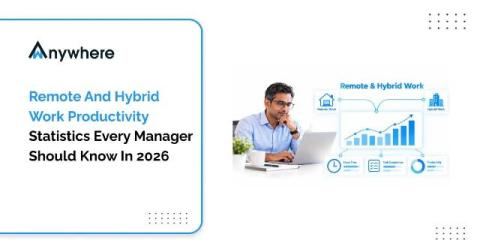
Remote And Hybrid Work Productivity Statistics Every Manager Should Know In 2026

Hybrid is now the most common arrangement for remote-capable employees, at 52% according to Gallup’s May 2026 data. Rigorous research, including a randomized trial published in Nature and industry analysis from the US Bureau of Labor Statistics, finds that remote and hybrid work does not reduce productivity on its own. The bigger risks for managers are trust gaps, uneven measurement and data security on remote seats.

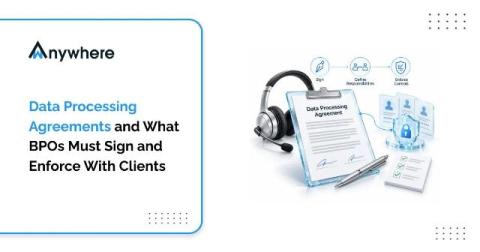
Data Processing Agreements And What BPOs Must Sign And Enforce With Clients

A data processing agreement is the contract that sets out how a BPO may handle a client’s personal data, including instructions, security measures, sub-processors, breach support and audit rights. Signing it is only half the job. BPOs must also enforce every clause on every seat and be able to prove it.

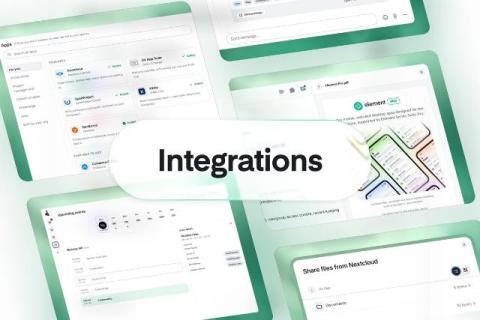
Smoother collaboration with integrations

People do their best work in a state of flow, when they can move from a conversation to a document to a task without breaking their train of thought. That puts the onus on productivity vendors to make their tools work together seamlessly. Customers running sovereign stacks tell us exactly that. As one put it: "It isn't a problem that the apps are named different things, or that they're made by different vendors.

Video Communication for Distributed Teams: Match the Tool to the Conversation

Distributed teams don’t usually struggle because they lack video communication tools. The real challenge is knowing which tool to use for the right conversation. A quick question can easily turn into a 30-minute meeting, a company-wide announcement can become an unnecessary 400-person video call, and the same product walkthrough may be explained live multiple times when a single recording could do the job. The solution is to match the communication format to the purpose of the conversation.