

Teams | Collaboration | Customer Service | Project Management

Why is AI accelerating work but not improving it? Our research with 9,500+ workers explains the AI transformation gap

AI adoption has reached the point where people are getting real value from it, but turning those individual wins into business outcomes is getting harder. That gap is what we set out to understand in The State of Intelligent Collaboration, our study of 9,500+ leaders and employees across North America, Latin America, Europe, and Asia-Pacific, run in September and October 2026.

Skills in Ask AI: less prompting, more time to deliver

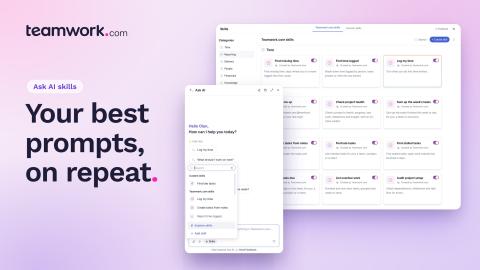
Skills are coming to Ask AI: saved requests you run with a single command. Type /, pick a skill, and get the status update, late-work list or timesheet check your team needs every week. No more retyping last week's prompt and tweaking it until the output looks right. Your team gets reliable answers in one step and spends its time on client delivery, not on describing it.

Why Does Generic AI Stall in the Contact Center? What Vertical AI Deployments Taught Us

Vertical AI is artificial intelligence that works with an industry’s own data, workflows, and rules. In the contact center, that context decides whether AI routes, answers, and prioritizes correctly or only sounds fluent. Generic AI hears what a caller says; vertical AI understands what it means for an insurer, a medical practice, or a public agency.

Timesheet Errors: What They Cost and Why Review Misses Them

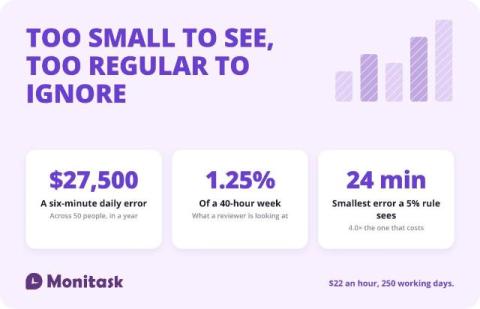
A timesheet error is a difference between hours worked and hours recorded. The expensive ones are small and regular rather than large and rare: 6 minutes a day costs $27,500.00 a year across 50 people at $22.00 an hour, and amounts to 1.25% of a 40-hour week — below the threshold any practical review would flag. Under 29 CFR § 785.11, hours the employer knows or has reason to believe were worked count as hours worked whether or not they were recorded. > This is not legal advice.

How to Migrate Team Communication Without Disrupting Business Operations

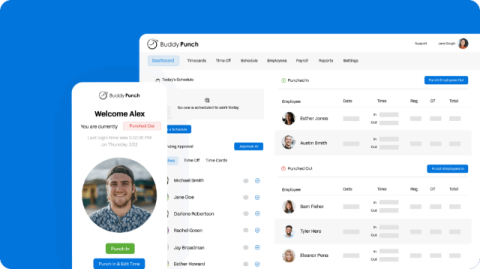
Businesses constantly adopt new technologies to improve workplace productivity and simplify internal communication. As organizations grow, their existing communication tools may no longer support their operational requirements. Moving to a new team communication platform becomes necessary to accommodate larger teams, improve collaboration, and streamline daily workflows. However, switching communication platforms requires careful planning and execution.

STOP Doing These 4 HR Tasks Manually in 2026!

STOP DOING IT MANUALLY! HR teams spend valuable time screening resumes, updating employee records, tracking leave requests, and managing compliance paperwork. But do these processes really need to be handled manually in 2026? In this video, we explore 4 HR processes you should stop doing manually and how AI and automation can help HR teams reduce repetitive administrative work. The 4 HR processes to automate.

Zulip Foundation & Team Updates

In May 2026, the Zulip open-source project and Kandra Labs announced the creation of the Zulip Foundation and that four core team members, including Zulip’s founder Tim Abbott, would step back from daily work at Kandra Labs. The Zulip Foundation had an impressive list of Board Members and Advisors lined up, and Kandra Labs had an Interim President (me, Kim Vandiver) in place to ensure continuity of leadership. So, how have things gone in the past 6 months? Really quite well.

XRP and the Renewable Energy Market: Kickstart Your Path to Retirement

Combining renewable energy infrastructure with digital asset technology based on XRP enables the creation of a unique and complementary "Core-and-Satellite" architecture for your pension portfolio. On one hand, real-world clean energy assets-such as utility-scale solar farms, wind farms, and energy storage systems-can secure long-term, stable Power Purchase Agreements (PPAs), generating predictable cash flows with an inherent hedge against inflation. On the other hand, XRP provides efficient on-chain settlement and supports the tokenization of Real-World Assets (RWAs).