

Teams | Collaboration | Customer Service | Project Management

Delivery Visibility vs. Employee Surveillance: What Actually Improves Project Performance?

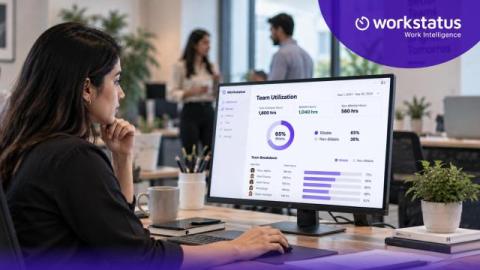
Organizations nowadays have access to more workforce data than ever. Many organizations use employee surveillance software for tracking employee activity. This software usually tracks activity, work hours, screenshots, and online behavior. Such data is used by businesses to understand how employees spend their time. According to Microsoft’s Work Trend Index, the average employee receives 117 emails a day and is interrupted every two minutes by meetings, messages, or notifications.

Rocket.Chat 8.7 brings XMPP interoperability for coalition operations

Coalition operations depend on XMPP. NATO's Federated Mission Networking (FMN) builds on it, it is a standing requirement in coalition RFPs, and it has carried mission communications for more than 20 years. With release 8.7, Rocket.Chat federates with XMPP, so organisations can coordinate with every partner on the mission network from a single sovereign platform. This release is the first step in a larger build: native XMPP federation, engineered into the platform rather than bolted on.

Simpplr's Rewards Store evolution: built into the everyday employee experience - not bolted on

Recognition works best when it doesn't ask people to leave where they already are. Say thank you in one app, redeem it in another, and the moment loses its shape before it ever lands. Most recognition programs were built as bolt-ons, sitting next to the intranet instead of inside it. That gap is where participation quietly stalls.

What Our Report Says on NIS2 Readiness

NIS2 has moved from a directive text to a daily operational reality for thousands of organizations across the EU, and Wire's new State of Secure Collaboration 2026 report shows how far everyday collaboration habits have to travel to catch up with that reality. We surveyed 208 IT, security, and compliance leaders across France, Germany, and the UK about how they collaborate, what they consider sensitive, and how prepared they feel for the regulation.

6 Data-Backed Ways to Reduce Employee Attrition

Attrition isn’t slowing down — it’s accelerating. Half of hiring managers now expect turnover to increase in 2026, up from 39% in 2024 and 33% in 2023, and that number climbs to 64% among large companies with 500 or more employees. The cost side of the equation has gotten worse too: the average cost of replacing an employee has jumped from $36,723 to $45,236 in a single year, an increase of nearly $10,000 per departure.

Sprint Management 101: Types of Sprints, Why They Matter, and How to Track Them Effectively

Every agile team has lived through this moment: the sprint board looks perfectly on track, every card is moving left to right, and then two days before the deadline, half the team is scrambling and the sprint goal quietly gets downgraded to "we'll finish it next sprint." If that sounds familiar, the problem usually isn't your team's effort — it's a gap in how sprints are planned, tracked, and understood in the first place.

Why frontline workers miss critical updates and what IC teams can do about it

Frontline employees are the nuts and bolts that hold your business together. When they’re all in the right place and thoughtfully aligned, they create a stable foundation. But if they’re not aligned, the structure starts to wobble.

How to Automate Employee Offboarding Without Security Gaps

When an employee’s final working day is recorded in the HR system, the offboarding process has only just begun. IT must remove access, equipment needs to be returned, HR has to schedule the exit interview, benefits teams may need to send a COBRA notification, and final documents must be completed. When these steps are handled separately and manually, important actions can be missed. So, what is employee offboarding automation?