
Teams | Collaboration | Customer Service | Project Management

How to drive cohesive employee experience across thousands of miles without a desk

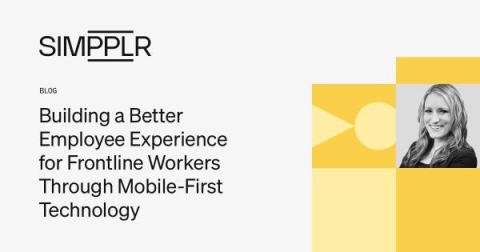
When Hannah Bolte joined Lozier Corporation as Director of Marketing and Communications, one of her goals involved keeping employees connected. This was hard because they used a printed newsletter that HR sent out every three months. Learn how this mode shifted from a manual process to a mobile app, along with challenges and tips learned along the way, in our latest Cohesion Podcast!
6 benefits of open source software for enterprise businesses [+10 best tools]

The days of the old-school proprietary software are gone! Open-source is the new kid in town. And it's taking the business world by storm — including enterprise businesses. Businesses of all sizes are increasingly adopting open-source enterprise software as the digital landscape continues to evolve. Traditionally, we've seen open-source projects being adopted by smaller companies with limited budget or niche software needs.

6 Steps to Implement an Employee Experience Strategy

Employee experience strategy is designing and implementing an integrated set of activities, initiatives, and programs that collectively create a positive and productive work environment. Gartner has identified that the employee experience (EX) is about more than just the technology used to enable work - it is about all the interactions employees have throughout their day-to-day work and how their contexts influence these interactions.

The ultimate guide to ABM project management

Businesses trust their marketing agencies to help them find, engage with, persuade, and close the accounts they need to maintain success and sustainability. Instead of the “spaghetti against the wall” approach of gathering as many prospects as possible then narrowing in on the highest-quality ones, it makes sense to proactively target a client's ideal customer and create a personalized marketing strategy. This idea is the premise for account-based marketing (ABM).

Zendesk customer journey map - understand your customers

Customer experience is more important now than ever before. Today, a staggering 80 per cent of customers consider their experience with a company to be as important as its products. While 60 per cent of customers in the UK expect the customer experience to be connected. And to further complicate matters, we live in an omnichannel world where the average consumer will use as many as 10 channels to communicate with a company.

Build your email list business using chatbots

How many emails will you send today? At a guess, we’d say close to a hundred. After all, there are 4 billion daily email users sending a staggering 370 billion emails each day. Email marketing accounts for a large number of those emails, which is no surprise given that email marketing is one of the most cost-effective ways of talking to customers. McKinsey research highlights the fact that email marketing consistently outperforms other forms of promotion with a ROI of $40 for every $1 spent.

Zendesk Enterprise Chatbot - improve customer relationships

In 1966, Eliza was born. The brainchild of Joseph Weizenbaum and a team of computer scientists at MIT (Massachusetts Institute of Technology), Eliza is widely recognised as the world’s first chatbot. She was pretty basic compared to today’s chatbots but could identify key words in sentences and then ask questions back to the user based on that input.

Zendesk VoIP for business for more affordable customer calls

How do you turn a customer into a fan? Ironically, one of the best ways to trigger word of mouth is to use your own voice and speak one-to-one with customers. Speaking directly to a customer enables you to better understand their needs, which means you can tailor solutions and offer additional services as they become more receptive to cross selling and upselling. Voice interactions can make a customer feel more appreciated as they experience being ‘seen’ and ‘heard’.

Bare Minimum Monday: The New Workplace Trend Similar To Quiet Quitting

The concept of “Bare Minimum Monday” has been gaining popularity in workplaces across the globe. This new trend involves employees doing the bare minimum required to get by on Mondays. It is similar to the concept of “quiet quitting,” where employees disengage from their work and quietly start looking for new opportunities. ‍ In this article, we will explore the reality of Bare Minimum Monday and whether it is a cause for concern.