
Teams | Collaboration | Customer Service | Project Management

What does agentic PSA mean? A plain guide to what the agents actually do

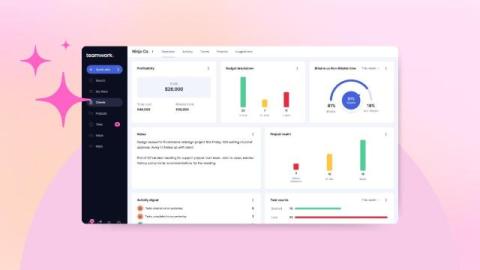
Agentic PSA is professional services automation where AI agents do parts of the operational work, such as drafting a client update, and a person approves the result. A PSA, or professional services automation platform, connects projects, resources and financials in one system, and the "agentic" part is about who does the work inside it. At Teamwork.com, I run AI on my own project admin, status updates and reporting, and nothing goes out until a person has checked it. That check is why I trust the output.


What Does Each Client Really Cost Your Consulting Firm?

A $50K client is not always more profitable than a $30K client. Revenue tells you what a client pays you. It says nothing about what it costs you to serve that client. Every engagement pulls time from your firm in ways the invoice never shows. Delivery work. Client management. Rework. Internal coordination. Waiting. Add all of that together to find the true cost of a client.

Black Friday Deals 2026: Find Software Worth Paying For

There’s a particular kind of satisfaction in finding software you’ve wanted for months at a lower price. You’ve checked the features. You can already think of three ways your team would use it. Then the Black Friday offer appears, and the purchase suddenly feels much easier to justify. We get it. We love good deals too. Sometimes, the timing is just right.

What Is Workforce Management Software?

Workforce management software helps businesses plan employee schedules, track working hours, record attendance, manage time off, and review work-hour data in one place. It also turns this data into reports that help managers spot staff shortages, track attendance, control labor costs, and plan work more effectively. Some workforce management systems, especially those used in retail and contact centers, also forecast how many workers a business will need at different times.

$7 billion and counting: Why now is the time to build on Atlassian

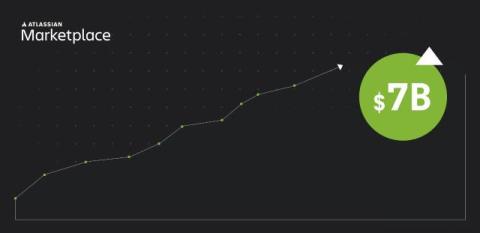
The Atlassian Marketplace has surpassed $7B in lifetime sales, and while that alone is a milestone worth celebrating, the pace behind it may be even more exciting. The most recent $1 billion was transacted in just nine months, the fastest billion in Marketplace history. Nearly half of all lifetime Marketplace sales happened in the last three years. Those numbers reflect something bigger than just a storefront.

Best Time Tracking Software for Consultants in 2026

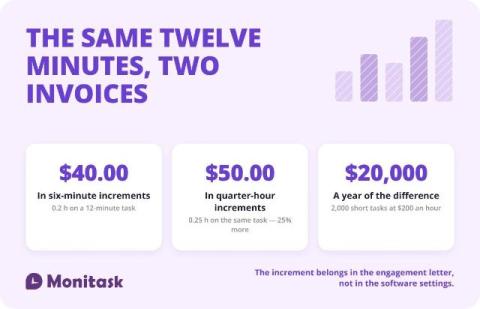
The best time tracking software for consultants records time against a client and a project, separates billable from non-billable hours, and turns approved time into an invoice without re-entry. Beyond those three, the choice depends on how you bill: hourly work needs billing increments, retainers need a running balance, and fixed-fee work needs an effective hourly rate. This guide compares ten tools and then covers the billing decisions the tools leave to you.

Leading vs lagging indicators for professional services: a pairing map finance can act on

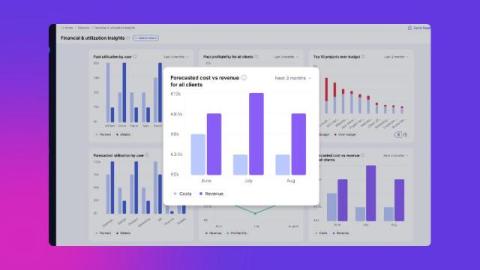
Leading vs lagging indicators for professional services comes down to timing. Lagging indicators like margin and realization report what delivery already decided; leading indicators are the delivery signals that move weeks earlier. Before I joined Teamwork.com, resourcing forecasts were consistently the hardest numbers I owned as an agency Account Director, and hard-to-build forward numbers are the ones worth checking weekly.

How to spot at-risk projects before margin goes

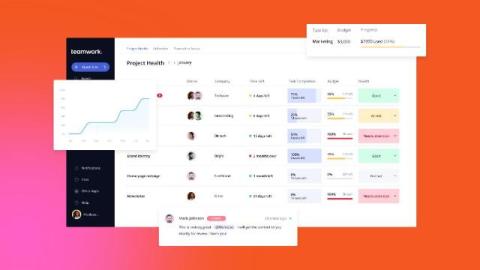
Knowing how to spot at-risk projects before margin goes comes down to one weekly check: what each project has spent against what it has delivered. Before I joined Teamwork.com, I worked agency-side, where clients kept asking for more inside the same retainer and nothing in our process recovered the cost. The lesson stuck: by the time a report said overspent, the decision behind it was long past cheap to fix. This guide gives you four leading signals with thresholds, a worked example and the fix for each.

Zero Trust Security: Principles, Benefits & Implementation

Zero trust security is a cybersecurity approach that requires organizations to verify users, devices, and applications before granting access to sensitive resources. As enterprises adopt cloud services, support remote employees, and collaborate with other departments and external partners, security teams have to manage more identities, devices, and access points. Zero trust helps with that.