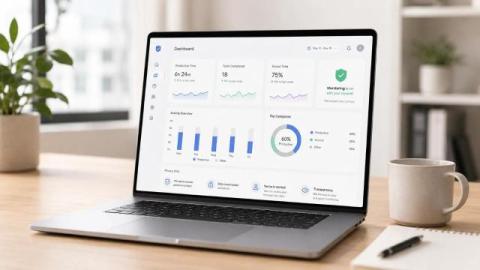
We all get excited by the output our team or we bring to the table. But often we forget that these projects may keep going over budget, some employees may be working late, or a task that should take a few hours may take an entire day! These problems are often difficult to spot without proper time data. The best time tracking tools give you a clearer picture of where your team's hours are going. Let’s learn more about the major business problems that time tracking solves.
Salary determines how an employee is paid, but doesn't show where their working time goes. For teams handling multiple projects or clients, time tracking reveals how employees spend that time, helping businesses measure project costs, plan resources, set realistic deadlines, and identify excessive workloads.
Colin Duff is CEO of Mosaic Innovation and the creator of the most-used Jobs to Be Done template on Miroverse. He has rebuilt it around Miro AI Flows so that customer interviews turn into structured, traceable evidence while the research is still running. Here is how it works, and the template to try it yourself. Last year, I built a Miro template to make Jobs to Be Done easier to apply.
Customer onboarding software used to mean one thing. You installed a tool, built a product tour, and hoped new users followed the tooltips to their first real action. That category has now split in two. Tours still narrate the setup, while a newer group of AI agents performs it alongside the user, and the difference shows up in activation rates.
There’s a particular kind of panic that sets in when a critical role sits open for too long. The pressure mounts, the team feels the gap, and the instinct is almost always the same: post the job, call the agencies, widen the search, look outside.
Picture this. It's 9 a.m. on a Monday. Fifty employees can't log into their laptops. Twenty more need their VPN reset. Someone's asking why their software access request has been stuck for three days. Your IT team hasn't even had coffee yet, and the ticket queue already looks like a traffic jam. This is the exact moment where an IT helpdesk AI agent earns its keep.
Internal communication software is becoming an essential technology for reducing physician burnout and improving clinical workflows. By streamlining communication, handoffs, and team coordination, internal communication software helps physicians spend less time managing fragmented messages and more time focusing on patient care.
Customer work rarely lives in one place. Salesforce holds the account, opportunity, contact, and case details. Jira shows the product work behind a customer commitment. Confluence holds the account plan, enablement materials, and meeting notes. Jira Service Management tracks support requests and escalations. Slack, Microsoft Teams, Google Drive, and other tools hold the conversations and assets that explain what’s really happening.
Employees accept monitoring when it's disclosed upfront, aimed at a stated purpose, and limited to work activity. They reject it when it's hidden, vague, or used to punish small mistakes. The rest of this guide breaks that answer down with the data, the law, and the exact line between the two.