

Teams | Collaboration | Customer Service | Project Management

The latest News and Information on Project Management, Methodologies, Productivity and Tools.

The FinOps Playbook: Closing the Gap Between Finance and Ops

Revenue is up, but profits aren’t. If that sentence feels familiar, it doesn’t mean there’s a problem with the work itself. The problem usually lies with how the people running the business are working together. This shows up most clearly in a disconnect between finance and ops. Instead of working side by side, they’re solving different puzzles in different rooms. And most likely using different data sets. That gap in collaboration is how margin leaks can go unnoticed.

How to Audit Your Tech Stack: A 5-Step Guide

Most firms know they’re paying for tools they don’t fully use. What they don’t know is how to fix it. That’s why we created the Tech Stack Audit Workbook. It includes: It also generates a leadership summary that suggests next steps based on the info you enter. Best of all, the audit only takes about 90 minutes to finish. Let’s walk through it.

California Overtime Law

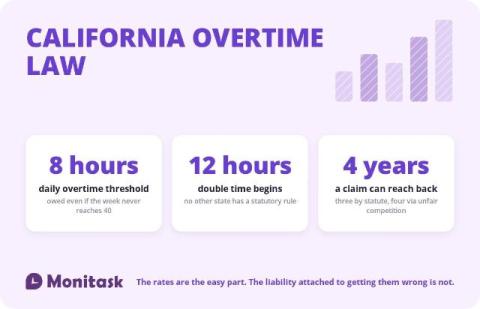
California overtime runs on the workday, not just the workweek. Cross eight hours in a single day and overtime is owed even if the week never reaches 40. Cross twelve and double time begins. California is the only state with a statutory double-time rule. Most guides stop once the rates are explained. That is the wrong place to stop, because in California the underpayment is rarely the expensive part.

User Activity Monitoring

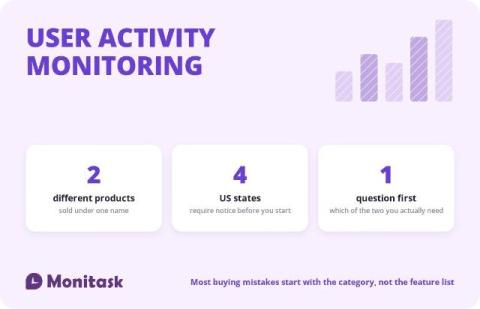
User activity monitoring, or UAM, is software that records what people do on company devices, applications and networks. That definition is accurate and it hides the thing that matters. Two distinct product categories are sold under this name. One exists to detect insider risk: it watches data movement, records sessions, and produces forensic evidence. The other exists to show how working time is spent: it records application and website usage and activity levels, and produces reports.

Timesheet Reminder

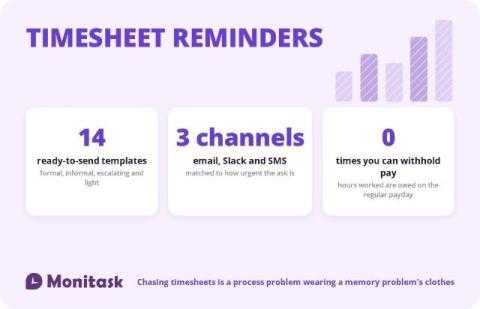
A timesheet reminder is a short message prompting someone to log and submit their hours before a deadline. It sounds trivial and it consumes a genuinely absurd share of payroll admin time every period. Below are 14 templates you can copy directly — for email, Slack and SMS, formal and informal, first reminder through final escalation — plus the timing that makes them work and the diagnosis to run when the same three names are late every single period.

How to Track Essential Milestones in Data-Heavy Research Projects

Data-heavy research projects can involve large datasets, multiple researchers, several review stages, and changing requirements. Effective management uses clear progress tracking to stay aligned. Without a clear way to track progress, teams can lose sight of what has been completed. Moreover, they may miss upcoming tasks and deadlines. For data-heavy research projects, researchers ask how to track work with milestones.

The Pitman Schedule

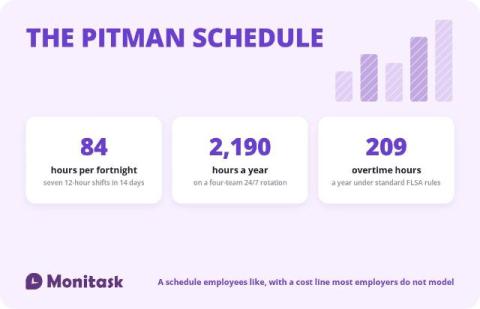
The Pitman schedule covers a 24/7 operation with four teams on 12-hour shifts, running a two on, two off, three on pattern across a 14-day cycle. Every team gets every other weekend off and never works more than three days in a row. It is popular for good reasons. It is also the schedule most likely to produce an overtime bill nobody budgeted, because 84 hours per fortnight means alternating 36-hour and 48-hour weeks, and the second one is over the federal threshold.

Biometric Time Clock

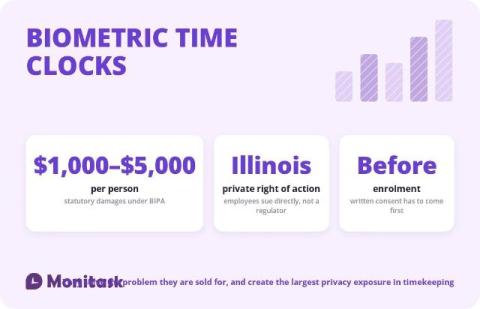
A biometric time clock identifies employees by a physical characteristic rather than by something they carry or remember: a fingerprint, a hand or face geometry scan, or occasionally an iris or voiceprint. Because a fingerprint cannot be handed to a colleague, it eliminates buddy punching in a way no badge or PIN can. That is the entire commercial case, and it is a good one.

How to price professional services projects: the four-gate method

I have spent enough time in agencies to know how to price professional services projects badly. The reason most projects lose money has little to do with the pricing model on the proposal. It comes down to two things nobody systematises: what the work truly costs to deliver, and what happens to that cost after the client signs. This guide fixes both with a repeatable four-gate method.