
Teams | Collaboration | Customer Service | Project Management

The latest News and Information on Project Management, Methodologies, Productivity and Tools.

Construction Timesheet

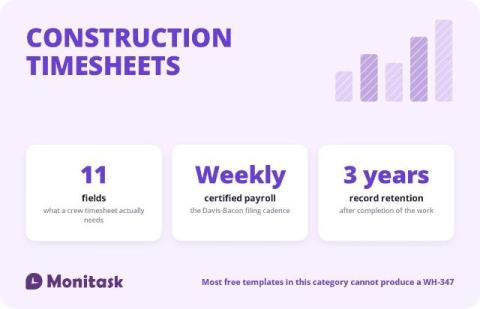
A construction timesheet records who worked, where, on what, and for how long. On a private job that is a payroll and job-costing document. On a federally funded or federally assisted job it is the source data for a weekly certified payroll report, and it needs two fields that almost no free template includes: work classification and cost code. The template below has both, splits straight time from overtime, and comes with a checklist of every field Form WH-347 requires.

Payroll Reminder

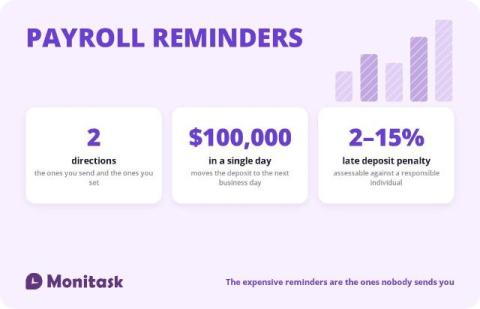
Search for payroll reminders and you get email templates for chasing timesheets. Those matter, and they are the cheap half of the problem. If a timesheet arrives late, payroll is inconvenienced. If a tax deposit arrives late, the penalty runs from 2% to 15% and can be assessed personally against the person responsible. Payroll reminders run in two directions. Outbound are the ones you send to employees and approvers.

How to protect consulting margins when AI shrinks billable hours

A market positioning project that used to take a consulting team four to five weeks now takes two and a half days. That's not a forecast. It's what Michael Nenninger, former EVP of digital consulting at msg, described on a recent episode of the Leaders in Consulting podcast. His team built the work as an AI workflow: around 60 prompts, 15 sub-tasks, and a human checking quality along the way. The host did the math on air: that's 5% to 10% of the effort it used to take.

Project Plan

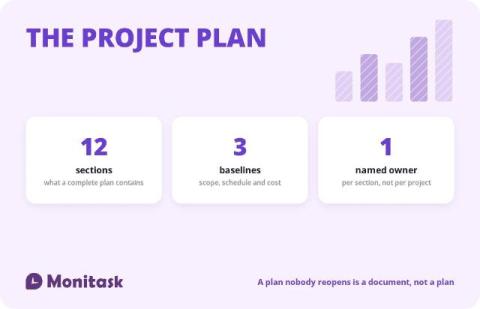
A project plan is the document that records what will be delivered, by when, by whom, at what cost, and what happens when any of those change. It is the reference the team and the stakeholders return to when there is disagreement, which is the only test of whether it was worth writing. Two things get conflated constantly and cause most of the confusion around this topic. A Gantt chart is not a project plan — it is the schedule section of one.

Non-Billable Hours

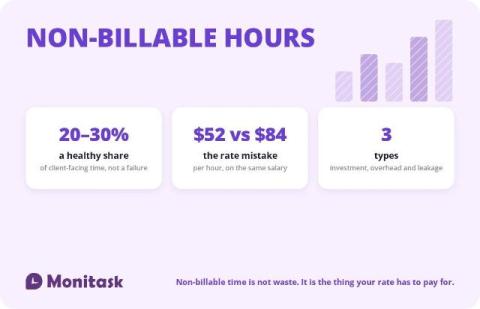
Non-billable hours are hours worked that cannot be charged to a client: internal meetings, admin, training, business development, proposals, and project overruns you chose not to invoice. Every guide to this subject treats non-billable time as a problem to minimise. That framing causes two expensive errors. It leads firms to price as though non-billable time does not exist, which understates the break-even rate by around 60%.

How we ditched the content spreadsheets and scaled 60% with AI Teammates

Tracking 15 pieces of content across 5 channels in a spreadsheet while chasing approvals in Slack is no way to do strategy. See how Asana's Content Strategist AI Teammate took over the pipeline—so the focus could go back to the work that actually matters. Chapters.

What is employee monitoring software? A complete guide for 2026

How to get visibility into how your team works without micromanaging or losing their trust Quick overview: Employee monitoring software helps businesses track how teams spend their work time across remote, hybrid, and in-office settings. This guide covers what it is, how it works, what the law requires, and how to implement it in a way your team will actually trust.

Should you record employee computer screens? Pros, cons, and safer options

The privacy, legal, and productivity considerations behind employee screen monitoring, plus smarter alternatives for modern teams Quick overview: Employee screen recording can help managers track performance, enforce company policies, and support IT troubleshooting. But it also comes with serious drawbacks: legal risks across multiple jurisdictions, employee trust issues, and a surveillance culture that can quietly drive up attrition.

How Many Pay Periods in a Year? Every Schedule, and the 27th Payday Problem

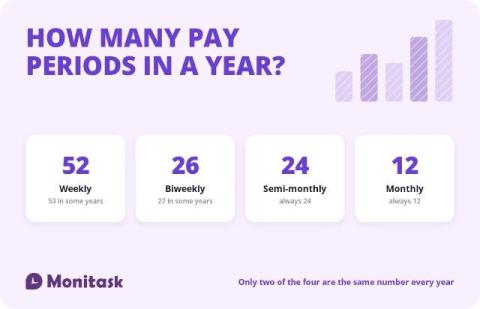
A year holds 52 weekly pay periods, 26 biweekly, 24 semi-monthly, or 12 monthly, depending on the schedule you run. Two of those figures are fixed and two are not. Semi-monthly and monthly are anchored to calendar dates, so they deliver exactly 24 and 12 every year without exception. Weekly and biweekly are anchored to a day of the week, and because 52 weeks covers only 364 days, they drift. Every 11 to 12 years the drift produces an extra cycle.