

Teams | Collaboration | Customer Service | Project Management

The latest News and Information on Project Management, Methodologies, Productivity and Tools.

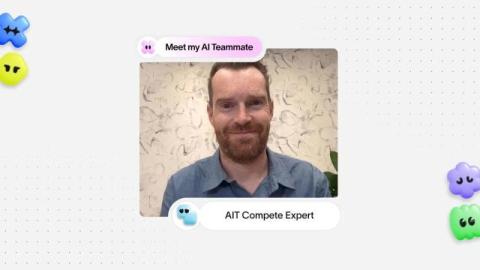
See your capacity, own the call

Ops teams are drowning in requests—manual intake, duplicate asks and status updates stitched together one person at a time. See how the Asana AI Teammates Program Ops Manager and Portfolio Advisor classify and route incoming work, catch overlapping requests before they spin up redundant effort, and flag dependencies across the portfolio. See what's possible at asana.com/A.
Asana Service Management

Introducing Asana Service Management, the AI-native enterprise service management solution. One intake point for every department. No matter what an employee needs, they have a single place to ask, and every request routes to the right team automatically. AI handles the routine stuff on the spot. Forgot your password? Reset in seconds. Benefits question? Answered. Your team gets time back for the work that actually needs a human.

What AI can do in performance management, and what it can't.

Performance management has been broken in most organizations for a long time. It was designed for offices, where managers could track progress through proximity and ambient visibility. Remote work removed the ambient visibility. AI is now removing the need for most traditional performance proxies.

Humans + Machines Unlocking Performance in Remote Teams

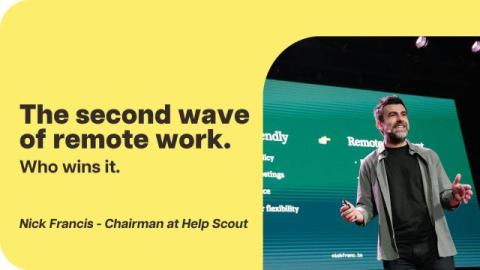
A manager copy-pasted a ChatGPT response to an employee's sick message, including the prompt fragment. The employee saw it. The trust damage was disproportionate to the effort saved. At @RunningRemote 2026, Nadia Vatalidis (Head of People, @todoist ) and Nick Francis (Chairman, @hellohelpscout ) discussed where AI belongs in performance management, and where it absolutely does not. Our take: AI can handle 90% of the synthesis work. Aggregating peer feedback, summarising months of data, addressing the recency bias that has always distorted annual reviews.

The Top 5 IT Jobs That are Easy to Get Into

Getting started in technology does not always require a computer science degree. Many IT jobs without a degree are accessible to candidates who can demonstrate practical skills, relevant certifications, hands-on experience, and a strong understanding of the tools used in the role. Fields such as IT support, systems administration, networking, cybersecurity, and web development often place significant value on what candidates can actually do.

Project scoping for agencies: how to scope client delivery so it stays profitable

Project scoping for agencies is the difference between a profitable engagement and one you deliver half for free. I've read hundreds of agency scope documents, and the ones that hold margin aren't the most detailed. They're the ones where every promise ties to a price, a boundary, or a trigger for a paid change. This guide gives you a margin-first way to scope, a seven-step process, and the pricing decisions that make it stick.

Creative brief guide: how to write a brief that locks scope

A brief that only inspires is a brief that leaks. This creative brief guide reframes the brief as a scope contract, not a mood-setting document. I spent nine years in agencies watching beautiful, on-strategy briefs sail through kickoff. Too many still ended in three rounds of unpaid revisions, because the document was built to fire people up, not to hold a line. So this guide gives you a repeatable way to write one.

Client portals: a delivery-first guide to client projects that actually protects margin

Most guides on this topic sell you the same thing: another link where clients drop files so they stop clogging your inbox. That is a real problem, and a shared space does fix it. But it is the smallest version of what this tool can do for a firm that lives on billable work. Before I joined Teamwork.com, I spent nine years in agencies where client reporting was a half-day, blank-page scramble every week. I want to show you why the portal you pick either protects your margin or quietly leaks it.

How Asana uses AI Teammates to scale competitive intelligence across a sales team of hundreds

When Andrew King, who heads up competitive intelligence at Asana, needs to help a sales representative win a deal, the information has to be exactly right. This means sourcing specific, current details customized for each individual rep. King supports a 400-person sales team. Each rep is working different deals, facing different competitors, and at different stages of the sales cycle.