
Teams | Collaboration | Customer Service | Project Management

The latest News and Information on Project Management, Methodologies, Productivity and Tools.

The leadership advantage AI can't automate: Attention

As AI accelerates work, leaders need to be more deliberate about what technology takes off people’s minds and where human attention can create the most value. AI promises to help organisations move faster. But at two Asana executive dinners held in Sydney and Melbourne in August, a different leadership question emerged: what should we choose not to accelerate? The challenge is not finding more hours in the day, but creating better conditions for the hours people already spend.
AI financial insights for professional services leaders

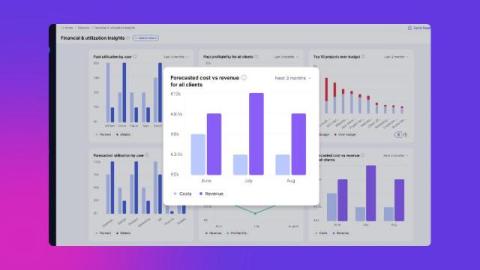
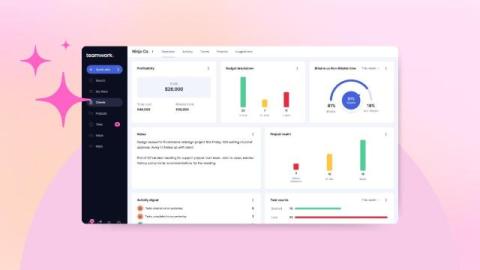
AI financial insights for professional services leaders are not a chatbot bolted onto last month's export. At Teamwork.com, we see leaders need margin, utilisation, and forecast signals while work is still movable. For example, a delivery lead can change staffing mid-project before an overrun hits the P&L; I've watched firms mistake a prettier dashboard for insight.

What AI work management actually means for client delivery teams

Most vendors sell "AI work management" as a prettier board with a chat box. That framing is too small for anyone running paid client delivery. AI work management is the operating layer that decides who does what, when you can safely promise dates, and what the work actually costs. It also decides which parts a supervised AI agent can take without wrecking trust. Before I joined Teamwork.com, I saw the spreadsheet version of that job repeatedly across agency environments.

Client profitability: how to see which accounts actually pay

What I keep seeing across services teams is adjacent tracking without a true client contribution view. You already watch utilisation, project budgets, or billable mix, yet a loud account can still look healthy while it taxes the firm. This guide shows how to measure client profitability, triage the book, and act while delivery is live.

PSA integration: the margin path map for services teams

Most search results for PSA integration still assume you run an MSP service desk next to remote monitoring. That is useful if that is your business. It is less relevant if you are trying to keep agency retainers, consultancy fixed fees, and multi-role rate cards aligned with finance. What protects margin is clear ownership, not just adding another Zap. Two systems both believing they own the client, the rate, or the invoice status is the real risk.

How to retain agency clients without another soft-skills listicle

I've seen this advice recycled for years, and it rarely fixes the real continuity problem. If you search how to retain agency clients, you get the same playlist: be proactive, run a quarterly business review, send a note, report ROI. Useful. Incomplete. The longest-held accounts I worked on shared one trait: clients rarely had to re-explain the brief, rarely felt the story reset when people changed, and rarely got surprised by the commercial story late in the year.

Praval, VP Zoho Marketing On Project Success Beyond Metrics

What does project success look like beyond the metrics? And what really makes a great project manager? In the first episode of "20 Lessons in Project" Management, Praval Singh, Vice President of Marketing & Customer Experience at Zoho, shares his thoughts.

Manage Your Client Approval Process

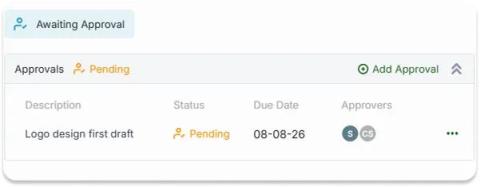
It’s common when managing projects that you need to sign-off with a client. For example, you might need them to approve a mock, document, or decision. Many companies do this with an informal message or verbal acknowledgement. This causes problems later. Who actually signed off on the decision? When? Which exact changes are required? This is why it helps to implement a formal process. At the same time clients don’t want to take too many extra steps.

What should we choose to keep human in the age of AI?

I’m TJ Power, a neuroscientist, no.1 bestselling author of The DOSE Effect, and the founder of DOSE Lab. Over the last 12 months, my team and I have been laser focused on a new question: how can we help society build successful brains that are ready for the AI future? Recently, with Asana, I hosted a series of dinners in Sydney and Melbourne for C-suite executives.