

Teams | Collaboration | Customer Service | Project Management

Project Capacity Planning: How to Balance Workload Before Deadlines Slip

Timeline approved. Tasks are assigned. The team knows what needs to happen next. But then a designer gets pulled into another launch, a developer has three critical tasks due in the same week, the project manager realizes QA was never properly accounted for, and the deadline that once looked realistic starts to slip. Most deadline problems build quietly when teams commit to more work than they can realistically complete – that’s where project capacity planning comes in.


Is AI flattening your team's creativity? Here's how to tell.

Think about your to-do list for a given work week. From responding to a colleague’s quick message to building a team strategy, how do you prioritize how much time and energy to allocate to each task? Behavioral science tells us most of us don’t optimize; we satisfice — we find the first “good enough” option, and we move on. The term, a mash‑up of “satisfy” and “suffice,” was coined by Herbert A.

10 best task management tools for delivering client work in 2026

I've worked in teams where the task board looked pristine on Monday and completely unraveled by Wednesday. Tasks slipped between tools, time logs lived in spreadsheets, and nobody could answer the simplest question: are we on track? That experience is one of the reasons I joined Teamwork.com, and it shapes how I evaluate every tool on this list. If your team delivers client work, the stakes are higher than a missed internal deadline.

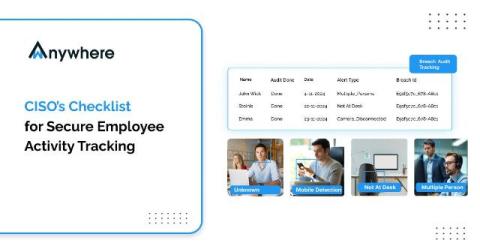
The CISO's Checklist for Deploying Employee Activity Tracking Software Ethically and Securely

Employee activity tracking software has become a non-negotiable security control for distributed teams. But CISOs deploying it now sit at the intersection of three competing pressures: the security team needs telemetry to detect insider threats, HR needs to preserve employee trust, and Legal needs documented compliance with GDPR, ECPA, and state-level statutes. Most deployments fail at least one of those three. Some collect activity data the DPIA cannot justify.

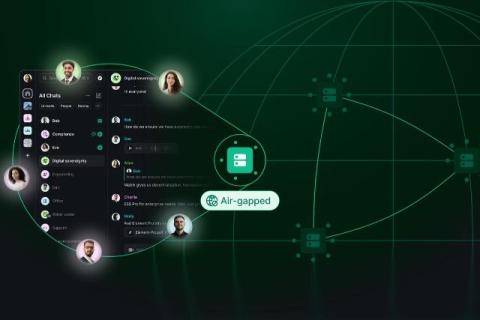
Air-gapped communications for national security

Our hyper-connected world is synonymous with progress. Digital transformation promises efficiently-run smart cities, improved economic performance, better healthcare outcomes and all the rest of it. Simultaneously, interconnections also create vulnerabilities; from ransomware crippling public services, to cyber attacks designed to damage critical national infrastructure, or silently extract sensitive data for years on end.

How to Choose Time Tracking Software: A Decision Guide

Most teams choose time tracking software by opening a comparison list, filtering by rating, and trialing the top result. Six weeks later, the tool is set up but nobody’s using it consistently. Three questions, asked in the right order before any product comparison, tell you exactly which software category fits your situation and what to evaluate within it.

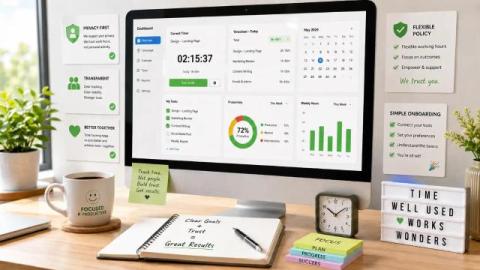
How to Reduce Resistance to Time Tracking Among Employees: 6 Simple Steps

Most managers assume employee resistance is about the time-tracking software itself. It's not. Most employees who resist time tracking aren't afraid of accountability. Instead, they are reacting to fear and unclear data policies. Most crucially, a system that hands all the visibility to managers and none to them. Let’s break down why this happens and how to reduce resistance to time tracking among employees.

The Impact of Outdated Quality Assurance Tools in Call Centers

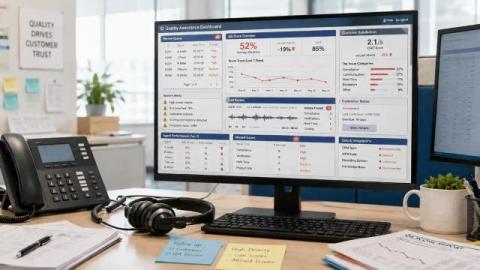
Every contact center operates for one purpose: great customer service. But when your QA is still manual, you are already losing ground at this point. Outdated tools leave 95%+ of interactions unanalyzed, create biased scoring, and push your best agents toward burnout. The result? Lower CSAT, higher turnover, and mounting compliance risk. Traditional QA tools are not enough anymore when modern solutions are available.

Canvas 26: Turning individual AI ambition into organization-wide impact

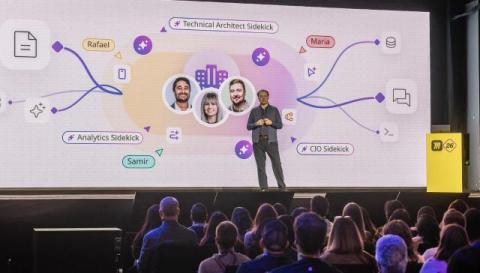
That’s a wrap on Canvas 26! Thousands of leaders, builders, and makers joined us in San Francisco and online to see what Miro’s shipping next. Building on last year’s launch of our AI platform, our Canvas 26 announcements address a problem most organizations are actively working through: AI is making people dramatically faster, but that speed isn’t compounding into impact at scale. Why?