
Teams | Collaboration | Customer Service | Project Management

Product Ops Software: What It Is and How to Choose the Right Platform

Product operations is the function that keeps product teams running efficiently at scale. When your organization has multiple product managers, several product lines, and a growing backlog of strategic decisions, ad-hoc coordination stops working. Product ops software gives the people managing that function a single place to standardize how product work gets done, track what’s happening across the portfolio, and make sure strategy connects to execution.

The Product Manager's Guide to Feature Prioritization Frameworks

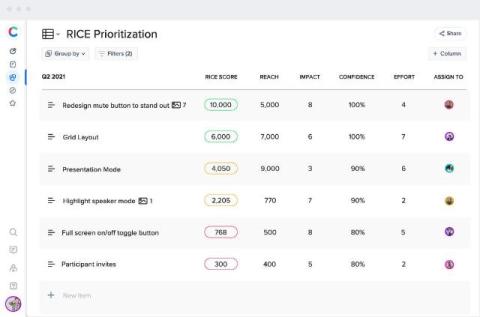
Every product backlog has more ideas than time. Sales wants the enterprise feature that closes deals. Engineering wants the refactor that prevents outages. Customers keep requesting something you promised two quarters ago. Without a shared framework, these conversations become political, and the loudest voice in the room wins. A prioritization framework gives your team a repeatable way to evaluate features against each other using agreed-on criteria.

What Is Product Ops and Why Every Scaling Product Team Needs It

Product operations (product ops) is the function that keeps a product organization running smoothly as it scales. If product management is about deciding what to build and why, product ops is about making sure those decisions get made consistently, communicated clearly, and connected to the teams doing the actual work.

craft.io vs Jira Product Discovery: What Product Managers Need to Know

If your team already runs on Jira, Jira Product Discovery probably looks like an obvious next step. It lives inside the Atlassian ecosystem, surfaces ideas from your engineers and stakeholders, and links those ideas directly to Jira issues. For teams that want lightweight idea capture without leaving Atlassian, it does that job reasonably well. The question worth asking before you commit is: how much of product management are you actually trying to support? Idea capture is one slice.

Introducing the Craft.io MCP Server

Your product data is now part of the context your AI works in. With the Craft.io MCP connected, agents can search, read, and act directly in your workspace. Ask your LLM to pull everything related to a topic, and it searches across feedback and work items, retrieves the relevant specs, and reasons about all of it together. No browsing. No tab switching. No gaps.

Track Non-Billable Work to Protect Project Margins Without Team Burnout

Is your team always busy, but project profits still seem lower than expected? One common reason is non-billable work tasks like That takes time, but does not directly bring in revenue. When this work is not tracked properly, it can affect both project margins and employee well-being, making it harder to reduce project cost overruns. In this blog, you’ll explore what non-billable work is, why it matters, and how to track it without putting extra pressure on your team. Let’s go!!

AI content creation

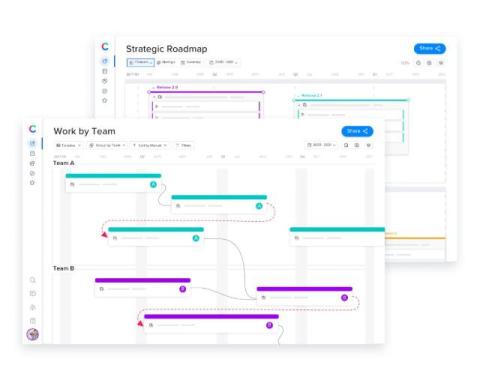
If you’re managing products at an enterprise scale, you know that roadmapping isn’t just about picking features. It’s about managing chaos. Between shifting stakeholder demands, engineering bottlenecks, and the nightmare of cross-team dependencies, you need a platform that does more than just look good in a slide deck. Generic project tools simply don’t have the “Product DNA” required for this level of play.

The Top Product Management Platforms for Enterprise Roadmap Planning

If you’re managing products at an enterprise scale, you know that roadmapping isn’t just about picking features. It’s about managing chaos. Between shifting stakeholder demands, engineering bottlenecks, and the nightmare of cross-team dependencies, you need a platform that does more than just look good in a slide deck. Generic project tools simply don’t have the “Product DNA” required for this level of play.