
Teams | Collaboration | Customer Service | Project Management

How to Prioritize Feature Requests from Customers: A Guide for Product Teams

Every product team feels it eventually. The backlog grows. Sales forwards another customer email. An executive champions a feature because one big account asked for it. And suddenly, the roadmap is being driven by whoever spoke loudest or most recently rather than by what will actually move the product forward. Managing feature requests without a structured process means your team spends time building things that feel urgent but aren’t strategic.

What Is Product Feedback Management and How Do Product Teams Use It?

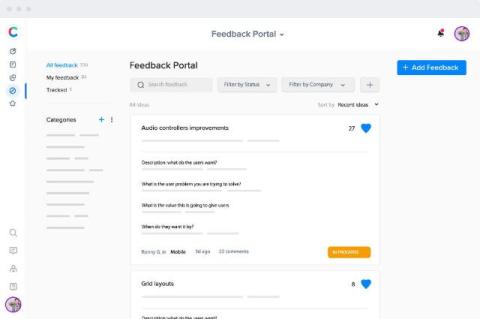
Product feedback management is the process of collecting, organizing, and acting on input from customers, internal teams, and stakeholders about your product. That input might be a feature request from a key account, a bug report from a power user, or a pattern of complaints surfacing in support tickets. The goal is not just to gather that input – it is to turn it into decisions. Which requests get built? Which get deprioritized? Which reveal a deeper problem the team has not yet named?

How to Connect Product Roadmaps to Jira: A Guide for Product Teams

Most product teams carry two versions of the truth. The roadmap lives in a slide deck, a spreadsheet, or a dedicated roadmap tool. The actual work lives in Jira. Product managers update one, engineers update the other, and neither stays in sync for long. The cost is real. When a feature slips in Jira but the roadmap still shows it shipping next sprint, stakeholders get false confidence. When engineering adds scope in Jira without it appearing on the roadmap, the product strategy quietly breaks.

How to Choose a Product Roadmap Tool: A Buyer's Guide for Product Teams

Most product teams outgrow their first roadmap tool before they realize it. A spreadsheet works fine when you have one product and three stakeholders. Once you’re managing multiple workstreams, collecting feature requests from customers, and trying to connect strategic goals to what engineering is actually building, the cracks appear fast. This guide covers what to evaluate when you’re ready to move to a purpose-built product roadmap tool.

Product Ops Software: What It Is and How to Choose the Right Platform

Product operations is the function that keeps product teams running efficiently at scale. When your organization has multiple product managers, several product lines, and a growing backlog of strategic decisions, ad-hoc coordination stops working. Product ops software gives the people managing that function a single place to standardize how product work gets done, track what’s happening across the portfolio, and make sure strategy connects to execution.

The Product Manager's Guide to Feature Prioritization Frameworks

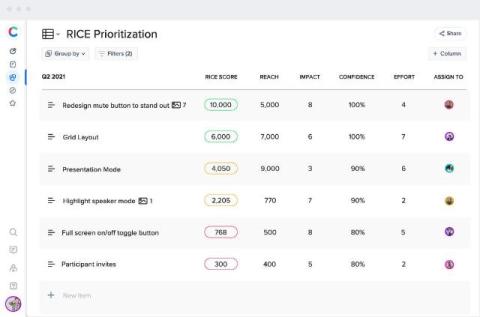
Every product backlog has more ideas than time. Sales wants the enterprise feature that closes deals. Engineering wants the refactor that prevents outages. Customers keep requesting something you promised two quarters ago. Without a shared framework, these conversations become political, and the loudest voice in the room wins. A prioritization framework gives your team a repeatable way to evaluate features against each other using agreed-on criteria.

What Is Product Ops and Why Every Scaling Product Team Needs It

Product operations (product ops) is the function that keeps a product organization running smoothly as it scales. If product management is about deciding what to build and why, product ops is about making sure those decisions get made consistently, communicated clearly, and connected to the teams doing the actual work.

craft.io vs Jira Product Discovery: What Product Managers Need to Know

If your team already runs on Jira, Jira Product Discovery probably looks like an obvious next step. It lives inside the Atlassian ecosystem, surfaces ideas from your engineers and stakeholders, and links those ideas directly to Jira issues. For teams that want lightweight idea capture without leaving Atlassian, it does that job reasonably well. The question worth asking before you commit is: how much of product management are you actually trying to support? Idea capture is one slice.

Introducing the Craft.io MCP Server

Your product data is now part of the context your AI works in. With the Craft.io MCP connected, agents can search, read, and act directly in your workspace. Ask your LLM to pull everything related to a topic, and it searches across feedback and work items, retrieves the relevant specs, and reasons about all of it together. No browsing. No tab switching. No gaps.