
Teams | Collaboration | Customer Service | Project Management

AI time logging: your timesheet, already written

Open the Log Time modal in Teamwork.com, click over to the Log my day tab, and the entries are already there: an hour on a client kickoff call, thirty minutes on competitor research, two hours drafting a homepage design. Teamwork.com built each of these from the tasks and projects you actually worked in today, before you typed a single word.

What Is a Ticketing System?

Picking a ticketing system for an internal IT team comes down to one practical question: how quickly can an employee get unblocked when a laptop dies, an account locks them out, or a piece of software stops working. When requests scatter across email, Slack DMs, and hallway conversations, nothing gets a real owner, nothing gets tracked, and the same problem gets reported three different ways before anyone touches it.

Why Context Matters More Than Speed in Business Communication

A message lands in a work chat: “Can you update this before lunch?” It is quick, direct, and almost useless without context. Which version needs updating? What changed? Who asked for it? Is there a file somewhere? A fast message can still create slow work when the person receiving it has to reconstruct everything that was left out. Modern teams are very good at moving information quickly.

WhatsApp Ticketing System: How to Set it up With InvGate Service Management

A WhatsApp ticketing system helps support teams deal with a problem many organizations already face: employees asking for help through chat instead of formal support channels. Employees rarely think in terms of “support channels.” When they need assistance, they simply open the tool closest at hand. In many workplaces, that means sending a quick message through WhatsApp.

How To Motivate Remote Employees With 9 Proven Strategies

Motivating remote employees is a management problem, not a monitoring problem. Employees lose motivation when they lack clarity, recognition, and connection, not simply because a manager cannot see them. This blog covers 9 practical strategies, including clear goals, consistent recognition, trust based management, autonomy, growth, wellbeing, and the right technology, plus how to tell whether they are actually working and how remote employee management software supports that without becoming surveillance.

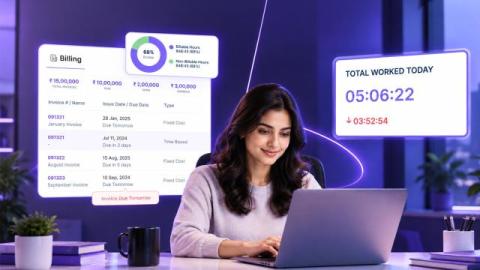
Billable hours vs. Non-billable hours vs. Hours worked

Month-end arrives. Payroll shows one number. The invoice shows a smaller one. Nobody in the room can explain the difference. That difference is not a mystery. It is the space between total hours and billable hours, and it decides your margin every single month. This guide breaks down billable hours vs non billable hours and total hours worked. You will learn what each one measures, how to turn them into a utilization figure and what changes once the record becomes something you trust.

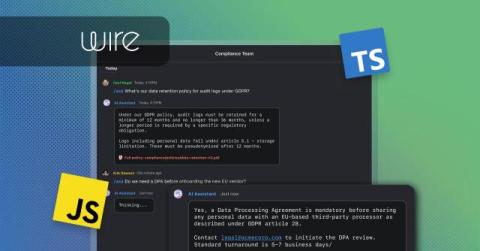
Wire Apps SDK: Now Available in JavaScript and TypeScript

Wire Apps SDK let developers build automations and integrations that run as full participants inside Wire’s end-to-end encrypted conversations. Until now, that meant building on our Java/Kotlin SDK. Today, we’re extending that same capability to JavaScript and TypeScript, giving teams the freedom to build in the language that fits them best.

Dreamforce 2026: Slack's newest innovations turn AI into a true teammate

This week at Dreamforce, we gave Slack one of its biggest upgrades yet, the connected interface for AI and Salesforce that works across your whole team. Every company is investing in AI right now, but they’re missing two things. First, the conversational context that adds long-term memory and insight that makes AI more accurate, actionable, and trustworthy. And next, the collaborative interface that allows employees to use these AI tools together and learn from one another.

Why Idle Time Alone Does Not Measure Employee Productivity

Idle time measures the absence of keyboard and mouse input, not the absence of work. A dashboard counter may increase when a mouse stops moving, but it cannot distinguish between an employee who has stepped away and someone reading a contract, taking a client call, or thinking through a complex architecture decision before typing a single line.