

Teams | Collaboration | Customer Service | Project Management

Top 10 On-Premise Server Hardware for Enterprise Data Sovereignty in 2026

The issue of data sovereignty has become very strategic to the boards of corporations in the year 2026. Mainly because of the increase in regulations, the risk involved in geopolitics, and the dependence on cloud technology, there was a renewed need to have servers on-premise to have complete control of the data of the enterprises.

Productivity Intelligence for High-Performing IT Teams | Workstatus

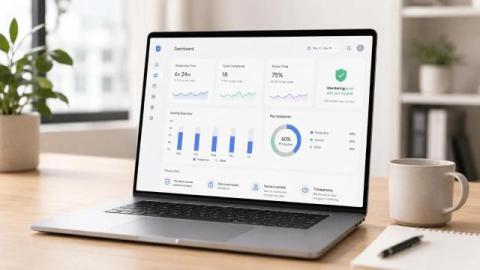
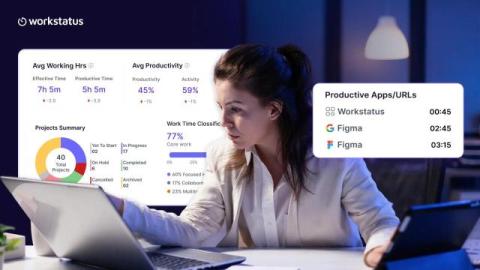
Your team logs 8+ hours a day. Utilization shows 95%. But how much of that time actually drives output? Traditional productivity metrics measure hours and capacity. They don’t reveal: That’s where Productivity Intelligence changes the game. Workstatus gives leaders real-time visibility into how work actually happens, so decisions are based on data, not assumptions. Built for IT companies, digital agencies, consulting firms, BPOs, legal teams, and professional services.

From AI hesitation to AI alignment: How Collective Next built an AI Manifesto Template in Miro

AI adoption doesn’t stall because teams lack access to the technology. It stalls because people don’t know where the boundaries are. Collective Next — a consultancy that co-designes solutions with Fortune 500 and nonprofit clients — saw this firsthand, both internally and with their clients.

The new governance and compliance framework for AI agents and automation

We’ve reached a point where almost anybody can create their own AI agent or automation. That’s great for experimentation, but a major headache for IT and security leaders. The question CISOs are grappling with is how to give people the tools to explore agents and agentic workflows while making sure they don’t inadvertently break the law or breach data processing agreements. It’s a problem we ran into at Miro.

How to improve employee work-life balance with workforce visibility

Employee work-life balance improves when leaders have clear visibility into how work is actually happening, not just what gets delivered. When workload, time allocation, and after-hours activity go unseen, imbalance builds quietly until burnout, disengagement, or turnover become unavoidable. This article explains how workforce visibility gives you clarity across the workday, helping you measure work-life balance and protect sustainable performance before strain impacts your results.

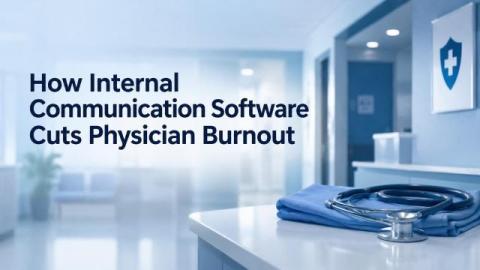
Healthcare Messaging Apps That Simplify Clinical Communication

Imagine you are a doctor needing an urgent update on a patient’s condition. You call your colleague, but they’re unavailable. You send an email, but response takes too long. Meanwhile, the precious moments tick away, and here you go juggling patient care with out-of-date communication tools. Frustrating, isn’t it?

Time Tracking Isn't Enough | Why Work Intelligence Drives Predictable Delivery

If your team tracks time every day, why does delivery still feel unpredictable? Timesheets are filled. Reports are generated. Dashboards look active. Yet deadlines slip. Margins shrink. And leadership finds out too late. The problem: This is not a time tracking problem. It’s a visibility problem. Time tracking shows effort. Work intelligence shows progress, risk, and real delivery movement. Workstatus connects time, execution, and delivery into one clear operational view. Instead of just seeing who worked, you see how work is moving — where risk is building — and whether outcomes are on track.

Elevate Ticket Resolution 2x Faster: We360.ai's Real-Time Agent Insights

We360.ai is revolutionizing customer support by delivering real-time agent insights that double ticket resolution speeds. This capability empowers teams to handle queries more efficiently, reducing backlog and boosting customer satisfaction in today's fast-paced service environments. Building on its workforce analytics prowess, We360.ai provides granular visibility into agent performance, enabling managers to optimize workflows instantly.

Balance Surveillance & Morale: The 2026 Guide to Employee-First Analytics for Modern Workplaces

In 2026, most organizations have some form of workforce analytics in place. Screens are tracked. Apps are monitored. Dashboards are full. And yet, many CEOs and HR leaders are asking a different question.