
The latest News and Information on Collaboration, tools and related technologies.
The main focus of B2B companies is to offer unmatched support to their customers. Failing to do so will increase the likeliness of customer churn and also damage their reputation.That’s why an increasing number of businesses are leveraging AI every year to enhance their brand and provide a level of support required to stay competitive. In Part 1 of this series we introduced the first two of five ways AI is impacting the B2B customer support sector. Here are next three ways.
Internal support teams receive an average of 492 tickets per month (Zendesk). 69% of internal support tickets are resolved in one touch (Zendesk). It takes an average of 24.2 hours to provide a first response to an internal support ticket (Zendesk). Given that 69% of internal support tickets are solved in a single communication, a first response time of 24 hours seems high. It suggests that internal help desk teams may be too busy to respond to queries quickly.
Statistics show 88% of HR teams consider employee engagement a strategic priority for their organization. Employee engagement is a workplace method designed to improve an employee’s outlook on the company and invest emotional interest in the organizational goals. If the right employee engagement methods are used, employees will be ready to push their limits and work towards the organizational goals, driven by a sense of personal interest in their work.
Did you know that 50-60% of today’s organizations still rely on manual Identity Access Management (IAM)? While password management technologies like LastPass enable administrators to provision and monitor users across IAM applications, it requires admins to manually change these factors for each individual within the organization. This system can lead to lapses in access restriction and ultimately large losses in time, money, and security.
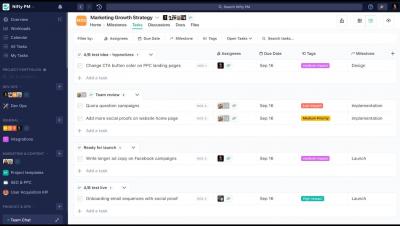
Chances are, your company and team priorities have changed since the beginning of this year. And you’re not alone—45% of global companies say their goals have changed at least once since moving to remote work. Without a clear communication strategy, it can be difficult to know how these new priorities impact individual work. Communicating team goals and aligning as a team is already hard to do when you’re working together in the same office.