
Here’s everything we shipped in June for Apploye! In this update, we’re introducing approval for manual time tracking, a completely rebuilt checkout experience, and platform performance improvements.
Explore the best HR software for your business in 2026. In today’s post, we will take a look at the various tools and applications that simplify your daily HR tasks.
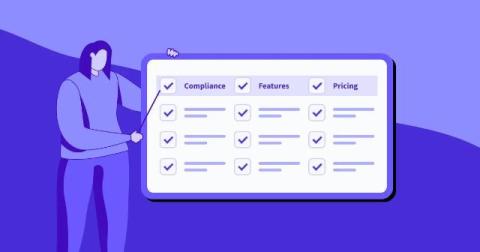
BPO compliance starts with the software an outsourcing team runs on every day, not the policy document sitting in a compliance folder. BPOs handle enormous volumes of sensitive customer data across large, distributed, and often remote agent teams, and when something goes wrong, it is the compliance team that has to explain what happened, who had access, and what evidence proves the organisation met its obligations.
Every week, it seems like the rules change for building products. We’re all figuring this out in real time, and one of the best ways we’ve found to do that is to sit down with other leaders who are in the thick of it. That’s why Atlassian recently started a series called AI Talks at our San Francisco offices with senior leaders building AI products. We break down what’s working, what’s broken, and what feels uncomfortable.
According to Atlassian’s 2026 State of Teams report, a growing gap has emerged: while AI makes individual tasks faster, many teams are struggling to keep that work aligned. In this panel discussion, Atlassian executives share an inside look at how they are operationalizing AI within their own departments to turn early experimentation into durable, connected ways of working.
For a long time, Jira was where you went to track work. You updated a status, closed a ticket. Something important has shifted now that agents can be assigned to work items. Jira is still a record of what happened, but now it’s something else too: a place where work can move between humans and agents. That shift got me thinking. What if I leaned into it fully and ran an experiment? What if each stage of the SDLC had its own specialized agent and the board itself handled the routing between them?
AI is taking root differently across every organisation — faster among younger generations in some places, driven top-down by leadership in others, and complicated everywhere by the question of how to balance development speed with cultural change. In this panel from Canvas 26 Tokyo, leaders from three professional services firms come together to share what AI adoption actually looks like when you're running large-scale projects: the hands-on realities, the Miro use cases, and what it takes to make the shift stick across an entire organisation.
Every organization now runs on a growing web of laptops, servers, cloud tools and remote endpoints. Each device carries its own operating system version, patch status, storage load and security configuration, and any one of these can quietly drift out of shape. An outdated OS, a missed security patch, a nearly full hard drive or an unmonitored network setting rarely looks urgent on its own.
Building is happening everywhere. But just because you can build it doesn't mean you should ship it. The teams pulling ahead have figured out how to move quickly from idea to validated direction — aligning before building, not after. In this product spotlight from Canvas 26 Tokyo, Mathias Davidsen (Solutions GM, Prototypes at Miro) shows how Miro Prototypes acts as the decision layer in your product development workflow.