

Teams | Collaboration | Customer Service | Project Management

Agile Meetings 101, How to conduct them properly

Agile meetings have two specific features that set them apart from regular meetings: they are focused on delivering value, and are strictly time-boxed. In fact, these two features make them quite productive, in contrast to most other regular meetings. These meetings are inseparable from an effective agile approach to product development. The reason is ingrained in the nature of agile approaches.

What is a swimlane diagram and how do you make one?

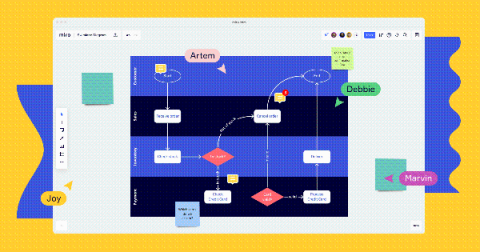
You’ve probably heard the old sentiment about “too many cooks in the kitchen.” Or, maybe you’ve experienced it yourself. In many cases, it can be true — too many hands working all at once can feel like chaos. But here’s the thing: When you have a clear handle on who’s doing what, extra cooks can actually lead to peak efficiency and superior quality. Fortunately, a swimlane diagram can help you get a clear handle on everybody’s responsibilities.

What is an Agile Work Environment?

Ever thought deeply about what an agile work environment means? An agile work environment is one in which employees have the freedom and flexibility to work in different sections of the workplace whenever they want and whatever they prefer. This freedom of choice in the work environment boosts productivity. However, the concept of a flexible work environment encompasses much more than simply adapting space to meet the demands of employees.

Q&A: How Vodafone reaps the rewards of work management

At Vodafone, a leading telecommunications company in Europe and Africa, Darragh Cresham, Operations and Technology Manager for Vodafone Business, has taken an agile and innovative approach to work management. By giving teams a single platform to work in rather than scattered apps and ad hoc processes, Darragh has enabled his teams to move swiftly and effectively tackle the challenges that come with complex processes and a dispersed workforce. So how does Vodafone use work management?

How to shift from languishing to flourishing: Q&A with Adam Grant

We need to rethink the way we work. The global pandemic has made it strikingly clear that working longer hours does not lead to greater impact. In fact, it leads to burned out, unhappy, and unproductive employees. According to the Anatomy of Work Index, 76% of workers are struggling to disconnect from work. And, in the last year, 7 in 10 workers experienced burnout. To rethink work and life in the new normal, we sat down with Adam Grant at our recent Focus & Flow Summit.

Three Gantt Chart Examples in Project Management

The Gantt chart is one of the most enduring project management tools in history, owing mainly to its versatility, ease of use, and wide scope of application. In fact, a recent survey reported that for 45% of project team members, it is their most used software feature, while for 22% of respondents in a similar survey, it is the most desired project management tool.

Why You Need Milestones in Project Management

“Remember to celebrate milestones as you prepare for the road ahead.” – Nelson Mandela Just as the original term ‘milestone’ denotes a marker indicating distance traveled, so milestones in project represent a task or activity completed so far. But they are actually far more useful and versatile than that. In this post, we define project milestones, and explore why they’re an essential part of the project management process.

How a Web Designer Agency uses OneDesk to centralise their work

Balancing all of a company’s various business needs can be difficult and often results in using a number of different solutions to get the job done. So often these days, a lot of software focuses on fulfilling one specific need, and doing it really well. While this is great in providing consumers with good quality services, it also results in complicated workflows that see users going between multiple products in order to complete a single project.

Why setting goals and creating clarity are key to better business in the UK

The last year and a half has really tested how well organisations in the UK—and around the world—are able to communicate goals and create clarity for their teams. Without strong goals to work towards together, teams flounder and can’t do their best work, especially considering the amount of sudden change and stress people have experienced.