How attention management helps your team reach big, hairy, ambitious goals
There’s no honor in being busy if all you ever do is busy-work.


Your mood, your demeanor and your verbal and nonverbal behaviors exert a powerful influence on your team members and the working environment. Every moment of the day, our brain is busy scanning the environment for unpleasant things we should avoid and pleasant things we should rush toward. Those things we actively work to avoid put us in “defensive” mode, and the positive items we seek out trigger what she describes as, “discovery” mode.
We’re often asked how Scoro differs from other business management software. Although there are many excellent features our clients always talk about, such as customizable dashboards and automated reports, it’s not about any one feature. Scoro’s biggest value is the complete solution that brings together all our features – empowering businesses to manage their entire workflow in one place.
You want to stop focusing only on getting tickets closed and instead work on building strong relationships with your customers. You’ve determined that e-mails and spreadsheets are no way to manage support interactions. And you want to break down the silos between support, sales, and product development and improve collaborations between these departments.
This decade has begun with economic uncertainty. From COVID-19 to political and social movements, businesses of all types have been impacted by these events resulting in major fluctuations in consumer trust.
Think of communication as the oxygen of a remote team. Like a good relationship, it takes work to communicate well, and there are ups and downs. As Carol Dweck from Stanford University, shares in her book Mindset: "It takes work to communicate accurately. It takes work to expose and resolve conflicting hopes and beliefs. It doesn't mean there is no 'they live happily ever after' but it's more like 'they worked happily ever after.'"
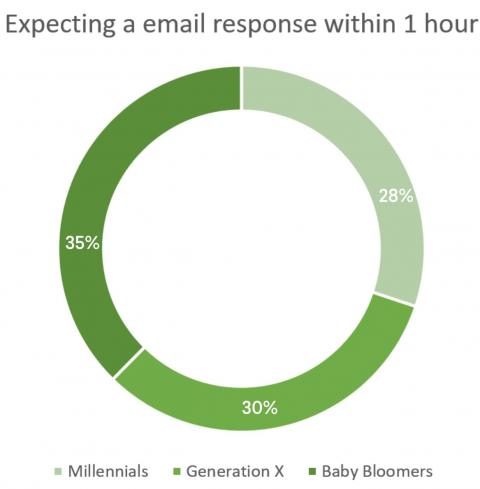
It’s no secret that the significance of an effective customer service strategy lies not only in delighting existing customers but in drawing in new business as well. Customers have become increasingly impatient and expect companies to respond to them faster. They are also likely to switch to other businesses or companies if your response time is too high.
Covid19 has changed the world we live in. We shop and work differently. Companies have changed their ways of operating. Businesses have been transformed to ensure employees and customers are safe. Our processes are leaner and more orientated towards digital tools. Teams found a new way to collaborate and because we need to stop the spread of the virus, we communicate more frequently with online tools. This is what is called digital transformation.
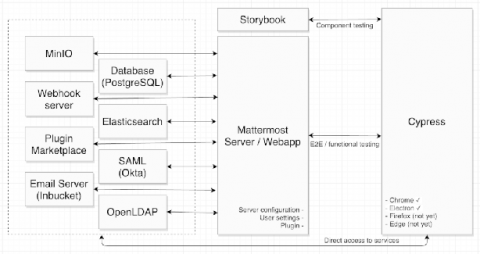
It’s been more than a year-and-a-half since we started using Cypress for our automated functional testing, and it has been well worth the investment. Cypress has now become an essential part of our process to automate regression testing, which helps us ship new releases faster, with increased quality.
Through decades of consulting for companies such as Apple, Bose, Roche, IBM, and others, we at TCGen Inc. have seen our share of product development snafus. We tend to see many of the same problems across organizations and across industries. Most of them are simple, all of them avoidable, and yet their effects are significant. Below are five of the most common product development pitfalls we have seen — and how to avoid them.