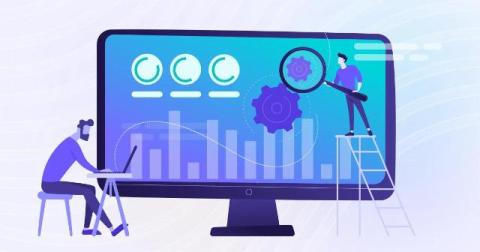
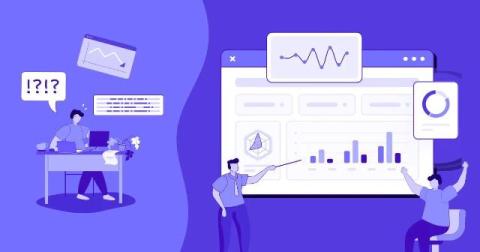
The global employee monitoring software market is expected to grow from about $7.27 billion to $7.61 billion by 2029. This means the compound annual growth rate (CAGR) is around 16.9% to 18.1% each year, according to The Business Research Company. This big growth is happening for three main reasons. First, more people are working from home or in mixed office-home settings now. Second, companies need better ways to protect their computer systems.
Most CEOs have no idea what's actually happening inside their business during an 8-hour workday. This video changes that. Running a team without real visibility isn't leadership - it's guesswork. And guesswork is expensive. Work Intelligence is what bridges that gap, connecting your team's daily effort directly to delivery, billing, and margins. In this video, we break down: Connect With Us: Subscribe for more insights on workforce productivity, team management, and work intelligence.
AI tools are everywhere in agencies today. Upto 78% of organizations globally are already using AI in at least one business function. Many agencies are using ChatGPT for content, Midjourney for design, SurferSEO for optimization, and dozens of other tools to work faster and deliver more. But here’s the problem: While AI is speeding up execution, most agencies still lack visibility into how these tools are actually impacting productivity, billable work, and team performance.
When call volume spikes, your team slows down. It exhausts your strongest call center agents and increases the abandonment rates. Also, it pushes your top performers toward the exit. I've seen managers react by loading even more calls into the queue. Well, that only makes the damage worse. See, handling high call volumes without burning out your team starts with knowing what causes the spike. Today, you'll learn exactly that and the strategies that keep your team stable when demand surges.
User activity monitoring often divides opinion. Some see it as an invasion of employee privacy and rights; others see it as essential for data security and protecting company systems. The truth? As workforces become more distributed and disruptive tech like AI becomes more prevalent, it’s never been more important to gain visibility over your teams and tools.
Have you been noticing that your call center numbers are slipping? Average Handle Time (AHT) is climbing, and First Contact Resolution (FCR) is dropping. But you can’t pinpoint why. Well, don’t mistake thinking that it’s a process or technology issue. Instead, it’s the engagement. To get more clarity, you must understand how employee engagement impacts call center productivity. Up next, I’ll explain what engagement means in a call center and the impact on productivity.
New managers often step into call centers and rush training to fix staffing gaps. I did the same. My agents struggled with call control, missed KPIs, and lost confidence within weeks. Then I shifted to structured coaching, clear metrics, and real-time feedback loops. Well, performance stabilized fast. Here, on call center training best practices for new managers, I’ll show you the exact system that builds high-performing agents from day one.
Multi-monitor setups are now the norm for remote and hybrid teams. A single screen often misses part of the work context, but capturing every screen by default can erode privacy and create review noise. The real challenge is not whether to monitor, but how to do it responsibly. Teams need a screenshot approach that gives managers enough visibility to understand work patterns, while still respecting employee privacy, minimizing distractions, and avoiding unnecessary surveillance.