Not all workforce intelligence software delivers the same level of insight. Compare the 10 best platforms in 2026 by features, use cases, and team fit.
Compare the 10 best healthcare performance management and time tracking tools for back office and admin teams. See HIPAA-compliant features and pricing.
Choosing employee monitoring software isn't just about tracking hours — it's about balancing productivity, security, and compliance without crossing into overreach. In this video, we break down the 9 essential features you should evaluate before you buy, from privacy controls and security analytics to AI usage monitoring and system integrations. We'll show you how Teramind implements each of these features in practice — giving you a real-world benchmark for what "enterprise-grade" employee monitoring software should look like.
Improve employee performance by measuring work patterns, reducing unnecessary meetings, protecting focus time, providing timely feedback, removing workflow friction, and making small data-driven changes.
Time tracking has always been a part of better time management. It helps one to better manage their day, understand activity patterns, and complete their daily goals right on time. Well, if time tracking is an integral part of personal time management, why should we overlook this thing when we are running an organization?
Employees accept monitoring when it's disclosed upfront, aimed at a stated purpose, and limited to work activity. They reject it when it's hidden, vague, or used to punish small mistakes. The rest of this guide breaks that answer down with the data, the law, and the exact line between the two.
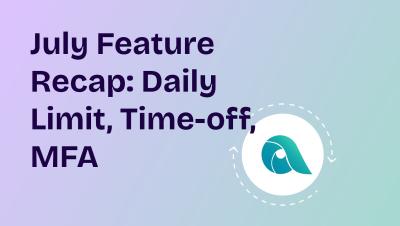
Here are the key features we shipped in July for Apploye! In this update, we’re introducing Multi-Factor Authentication (MFA) & Passkeys, Global Tasks, Daily Tracking Limits & Weekday Blocking, Time Off management updates, Profile & Email UI redesigns, and Desktop App v4.5 with stability fixes. Timestamps: Other Changes.
A ten-person team can log the same 400 hours every week. One month, they ship two client projects early. The next month, they barely close one. Same hours. Different outcomes. The difference is not effort. It’s where the hours go: deep work or busy work. This isn’t a productivity problem. It’s a margin problem. As per Gallup’s latest global workplace data, employee engagement fell to just 20% in 2025, the lowest in five years.