
Teams | Collaboration | Customer Service | Project Management

Deep Work vs Busy Work: What Drives Real Business Outcomes?

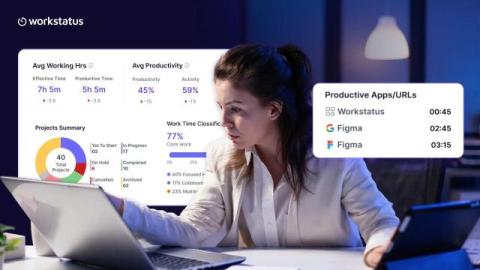
A ten-person team can log the same 400 hours every week. One month, they ship two client projects early. The next month, they barely close one. Same hours. Different outcomes. The difference is not effort. It’s where the hours go: deep work or busy work. This isn’t a productivity problem. It’s a margin problem. As per Gallup’s latest global workplace data, employee engagement fell to just 20% in 2025, the lowest in five years.


The homepage problem: why one intranet home stopped working

Every employee opens the same intranet homepage. It doesn't matter what team they're on, what they do, or what they need. The same banners, links, and announcements greet everyone. In trying to be everything for everyone, the intranet homepage ends up feeling relevant to no one.

The product org's next AI payoff: deciding well, together

AI has delivered a step change in individual productivity across engineering, product, and design. The defining opportunity now is organizational: turning that individual speed into impact a whole team can feel. For most of software’s history, building was the most expensive step, so teams organized themselves around it. AI has turned that on its head.

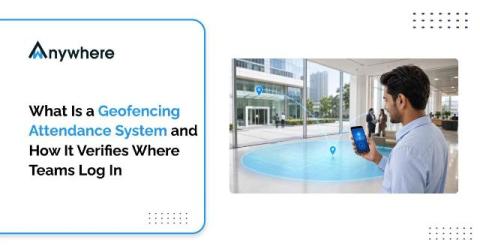
What is a geofencing attendance system and how it works

A geofencing attendance system is a location tracking setup that records attendance only when a verified user logs in from inside a defined virtual boundary, known as a geofence. Instead of simply asking where a device is, a well built geofencing attendance system asks two questions at once: who is logging in, and where are they logging in from.

How Integrated Collaboration Platforms Bridge the Gap Between Sales and Support

Historically, sales and customer support have traditionally operated in silos. Teams prioritized acquisition and revenue, while support focused on retention and customer satisfaction, often relying on separate systems with limited communication. The result was a fragmented customer journey and inconsistent experiences. Today, customer experience is a defining competitive advantage. Customers expect seamless interactions, regardless of department, making disconnected workflows increasingly unsustainable.

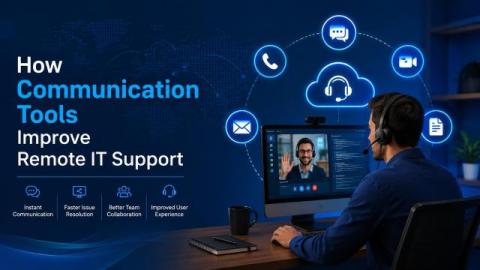
How Communication Tools Improve Remote IT Support

Understanding the New Normal: Distributed and Remote Workforces With more organizations embracing distributed and remote work models, IT support has become a critical pillar for operational success. The shift to remote work, accelerated by recent global events, has transformed how teams communicate, collaborate, and access company resources. According to a Gartner survey, 47% of companies plan to allow employees to work remotely full-time post-pandemic, highlighting the permanence of this trend.

What Is Conversational AI? A Guide to Conversational AI Chatbots

A conversational AI Chatbot is an intelligent computer program that mimics real-life human interactions. This is made feasible by the solid basis of machine learning (ML) and natural language processing (NLP). Siri, Alexa, and Google Assistant exemplify the concept of conversational AI. Unlike traditional first-generation bots that deliver canned answers to a set of questions, conversational AI bots are more complex and intelligent.

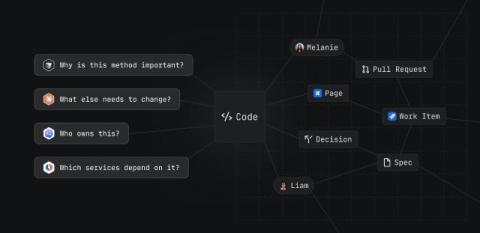
Introducing the AI context engine for your entire codebase

Without the right context, every day is day one for a coding agent. Agents may have the intelligence needed to write, refactor, and review code, but they still face the same challenge developers do: understanding how complex systems actually work. They need the right context to navigate cross-team dependencies, ownership boundaries, and downstream impacts that are hard to understand from any single workspace. Code only tells part of that story.