

Teams | Collaboration | Customer Service | Project Management

10 Ways to Keep Yourself Safe from Layoffs

Layoffs have become a reality across many industries, affecting companies of all sizes. Economic uncertainty, artificial intelligence, automation, shifting business priorities, and global competition are changing how organizations hire, retain, and manage talent. While no employee can completely eliminate the risk of being laid off, there are practical steps you can take to become more valuable, adaptable, and prepared for change.
6 Best Remote Monitoring Tools with Productivity Scoring in 2026

Managing a remote team is easy when everyone is sitting in the same office. You can walk around, check in with people, and get a general sense of how work is moving. But remote work is different. Someone can be online all day without getting much meaningful work done. At the same time, someone else might spend hours in meetings, research, design software, or other work that doesn't necessarily produce a lot of keyboard or mouse activity.

7 Effective Tools for Better Work Coordination in 2026

Nobody puts “coordination” on a job title, and yet almost everyone ends up doing it. Work coordination is the virtuous orchestration of internal and external processes – the constant, low-level hum of making sure the right task reaches the right person at the right time, that a decision made in one channel doesn’t get lost before it reaches the people who need to act on it, that a client-facing deadline and an internal review cycle actually meet in the middle instead of colliding.

Unified Collaboration Platforms: 5 Tools That Bring Work Together

Think about everything a smartphone quietly replaced. The camera you used to pack for trips. The alarm clock on your bedside table. The paper map folded somewhere in the car. A music player, a calculator, a GPS unit, and a drawer full of chargers with no obvious owner. None of those things became useless. We just stopped needing each one separately when one device could handle most of the same jobs.

The leadership advantage AI can't automate: Attention

As AI accelerates work, leaders need to be more deliberate about what technology takes off people’s minds and where human attention can create the most value. AI promises to help organisations move faster. But at two Asana executive dinners held in Sydney and Melbourne in August, a different leadership question emerged: what should we choose not to accelerate? The challenge is not finding more hours in the day, but creating better conditions for the hours people already spend.

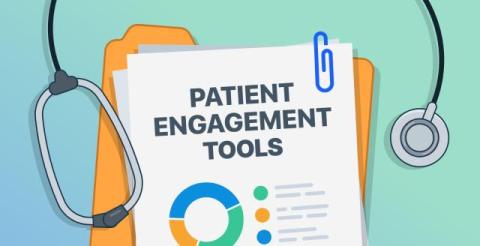
Patient Engagement Software: How the Right Tools and Organized Internal Communication Shape the Quality of Care

A quiet assumption is buried in the phrase “quality care”: that care is something delivered to a patient, like a package left on a porch. In practice, care only works as a two-way transaction. A treatment plan a patient doesn’t understand, doesn’t trust, or doesn’t follow is not a lesser version of good care – it’s not care at all. Medicine has always run on consent and cooperation, not compliance in the disciplinary sense.

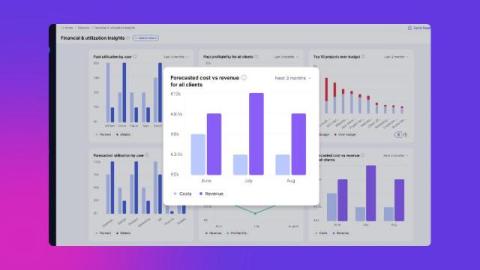
AI financial insights for professional services leaders

AI financial insights for professional services leaders are not a chatbot bolted onto last month's export. At Teamwork.com, we see leaders need margin, utilisation, and forecast signals while work is still movable. For example, a delivery lead can change staffing mid-project before an overrun hits the P&L; I've watched firms mistake a prettier dashboard for insight.

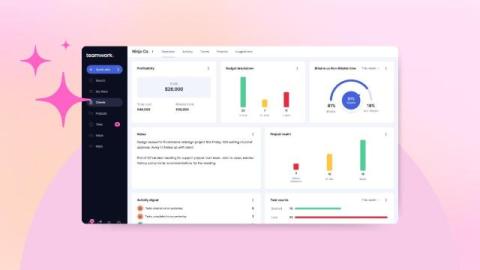
What AI work management actually means for client delivery teams

Most vendors sell "AI work management" as a prettier board with a chat box. That framing is too small for anyone running paid client delivery. AI work management is the operating layer that decides who does what, when you can safely promise dates, and what the work actually costs. It also decides which parts a supervised AI agent can take without wrecking trust. Before I joined Teamwork.com, I saw the spreadsheet version of that job repeatedly across agency environments.

What Is Product Feedback Management and How Do Product Teams Use It?

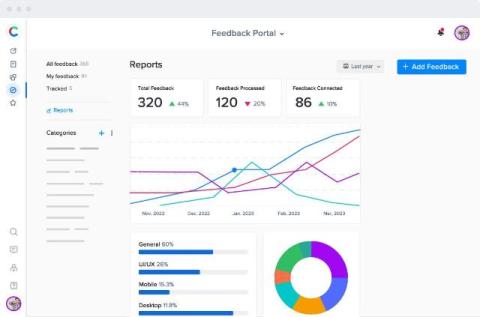
Product feedback management is the process of collecting, organizing, and acting on input from customers, internal teams, and stakeholders about your product. That input might be a feature request from a key account, a bug report from a power user, or a pattern of complaints surfacing in support tickets. The goal is not just to gather that input – it is to turn it into decisions. Which requests get built? Which get deprioritized? Which reveal a deeper problem the team has not yet named?

How to Connect Product Roadmaps to Jira: A Guide for Product Teams

Most product teams carry two versions of the truth. The roadmap lives in a slide deck, a spreadsheet, or a dedicated roadmap tool. The actual work lives in Jira. Product managers update one, engineers update the other, and neither stays in sync for long. The cost is real. When a feature slips in Jira but the roadmap still shows it shipping next sprint, stakeholders get false confidence. When engineering adds scope in Jira without it appearing on the roadmap, the product strategy quietly breaks.