
Teams | Collaboration | Customer Service | Project Management

How to use performance reviews as a retention tool

The modern corporate environment is competitive and dynamic, making employee retention an essential tactic for company success. Beyond just the financial costs, staff turnover has an impact on productivity, institutional knowledge, and team morale. Creative and successful retention techniques are vital as companies fight to hold on to top talent. Once thought of as a standard evaluation instrument, performance reviews have developed into a tactical tool for staff retention.


91% of new mothers have problems returning to work

As workplaces change, more and more companies are realizing how important it is to offer strong benefits, especially when it comes to family planning and fertility. Carrot, a top benefits provider, recently did a survey showing a complicated picture: even though benefits have improved, 91% of new mothers still have problems returning to work. The poll also shows how big racial differences are in how ready women are for pregnancy and how their experiences are during and after giving birth.to.

London companies are allowing more employees to work from home

Recent data from Hays Plc, a prominent recruitment firm, reveals a significant shift in the work patterns of London-based companies, indicating an increasing trend towards fully remote roles. This change is driven by a combination of high living costs in the capital and the attractiveness of London salaries without the associated commute.

How to manage underperforming employees and retain talent

It’s important to deal with bad behavior in a good way to keep the workplace happy and useful. If you ignore or deal with these issues incorrectly, they could hurt the team by making them sad or losing key players. This article discusses realistic ways to deal with underperforming employees in a way that encourages growth and longevity, keeping the workforce strong and motivated.

Utilization rate: How to track, calculate, and boost performance

Utilization rate is the measure of available time used for billable work, expressed as a percentage. You can determine utilization rate by dividing a team member’s total number of billed hours by the total hours they have available. In this piece, we’ll explain how to calculate utilization rates and discuss ways to reduce work about work and improve these rates across your team.

Unlock the Power of Workforce Intelligence with Analytics

Imagine you’re in charge of a big company and want to ensure all your workers are happy, productive, and working well together. But how do you do that? Well, it’s like putting together a puzzle. Each piece of the puzzle represents a type of worker and their job, and you must figure out how to make all the pieces fit together perfectly. We call this “workforce intelligence,” and making your company run smoothly is important.

The robust and refreshed Resource Scheduler

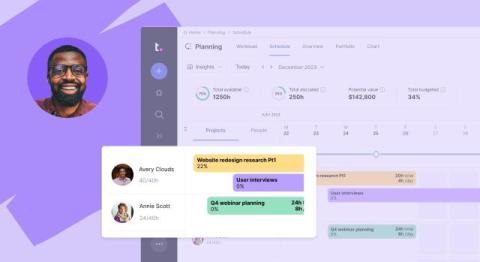
The time has come to roll out a modernized and more powerful Resource Scheduler to help you forecast future resourcing needs with confidence. It’s the same feature you know and love, only we’ve given it a big boost of functionality, and a striking new look and feel. It’s time to de-risk project delivery, optimize your business capacity, and reach peak utilization once and for all!

91% of remote companies are now embracing hybrid working

In the wake of the epidemic, the nature of labor has changed dramatically. Once uncommon, remote work is now commonplace for many knowledge workers. A recent Towergate Health & Protection survey indicates that 91% of businesses with workers who are capable of working remotely currently provide some kind of hybrid work arrangement. This adjustment takes into account both the changing preferences of the workforce and the flexibility required by the situation.

2 out of 3 Gen Z workers prefer the option to work from home

A recent survey conducted by Randstad highlighted the relevance of work-from-home arrangements in attracting Gen Z workers. The findings indicate a substantial shift in the expectations placed on employees in the workplace. Preferences for working remotely have expanded beyond the younger generation to include a wider range of age groups.

70% of organizations invest in generative AI to increase employee productivity

One phrase in the rapidly changing world of technology is causing waves across various sectors: Generative Artificial Intelligence, or Gen AI. It is indisputable that technology has the ability to transform processes, boost output, and improve consumer experiences.