
To lead a remote team successfully, you need a tech stack that lets you manage projects, communicate with employees, and deliver resources efficiently. If you’re relying on a mix of email, spreadsheets, and synchronous meetings, you’re probably: With the right remote work software, you can automate most team management tasks and work on leveling up your employees instead.
When you oversee large hybrid or remote teams, you need a reliable solution for monitoring and improving employee productivity. Yet you’ve likely found that most tracking tools fall short when it comes to enterprise-level needs, such as: In this guide, we’ll cover the best employee productivity tracking platforms for enterprise users so you can invest in the right software for your team and budget.
You see them on Instagram or Tik Tok, laptop perched on a table in a café overlooking the beach in some dream holiday destination. They usually caption it with something like “Today’s office” to make all their friends stuck in a dreary downtown cubicle jealous. They’re the digital nomads. Kids in their twenties living the dream, armed with just a laptop, a decent education, and a sense of adventure. Except they’re not in their 20s anymore.
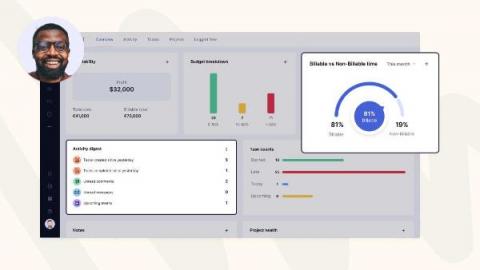
Note: If you aren’t seeing Clients in your left-side navigation, not to worry! Click here to learn about how to enable it. When managing multiple clients and their projects, the last thing you need to worry about is manually cobbling together metrics across their projects just to get a sense of how things are going, or realizing you have a client directory with gaps and outdated information. Being the only platform built to run client work, we have just the fix for you!
Processes and systems are essential for growing an agency. They’re the scaffolding holding the structure in place. But too many agencies mistake scaffolding for structure, becoming overburdened with procedure at the expense of productivity, creativity and collaboration. Process should help agencies scale, not become a straitjacket that belabours daily tasks and prevents knowledge sharing.
Mention the word “timesheets” to someone who has worked at an agency and it’ll probably send shivers down their spine and have them running for the hills. It’ll conjure up memories of frantically going through emails and to-do lists on a Friday, and somehow making things add up to 40 hours for the week. We’ve all been there! For an industry so dependent on good time management for success, it can be difficult to explain why most agencies struggle to do it effectively.
Mark Sanborn once said: "Your success in life isn’t based on your ability to simply change. It is based on your ability to change faster than your competition, customers, and business." In the agency world, how you implement change is just as vital as the specific changes you make. It's a classic case of the journey being as important as the final destination.