
Teams | Collaboration | Customer Service | Project Management

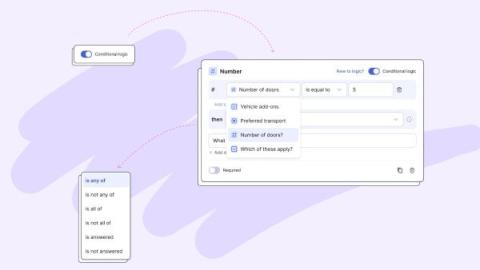
Tailor forms to your clients-and get more accurate results-with Conditional Logic

If you're doing any sort of client work, chances are you know the pains of onboarding new clients. There may even be times when you've sent them one of those generic questionnaires that asks about everything under the sun. Bored, the client loses interest, filling out the form with the most perfunctory answers so they can get through it ASAP. Ask yourself: is anyone happy about this? Enter Conditional Logic, a revolution in form creation that adjusts in real time based on your clients' answers.

The basics of burn-up charts: What they are and how to make them

Burn-up charts are just one tool in the project manager’s toolbox — but these humble charts can be impressively effective. They’re perfect for presenting a quick snapshot of project progress, as well as showing progress over time or the ways a project’s scope keeps shifting. The burn-up chart is well worth understanding and adding to your arsenal. So let’s take a look at what a burn-up chart actually is and how to make your own.

Technological tools and innovations enhance team efficiency

Using technology in our daily lives is not only beneficial, it’s a must in today’s fast-paced business world. Because of changes in technology, the way teams work together has changed. These changes have also affected the work itself.Two clear examples of this movement are the rise of digital workplaces and the trend toward working from home. These team efficiency tools make it easy for teams to communicate as if they were in the same room.

11 Best Project Management Tools For Teams of All Sizes

Looking for project management tools? There are lots available—each varying in features and complexity, but each helps you keep your team organized and on schedule. In this guide, we’ll highlight a list of project management tools and software that help you manage tasks, collaborate with your team, and manage resources.

The Qualities of a Successful Remote Employee

Remote work, that little accommodation everyone is after right now and for a good reason, is becoming increasingly popular. Nowadays, companies are more than ever exploring remote work options due to the financial, environmental, and health benefits of remote work. Remote work is here to stay, and remote workers need the right skills to succeed. But, what makes a remote worker successful? Is it the ability to work independently? Being able to stay organized and on task? Or is it something else entirely?

Mastering change request management: Understanding its essentials, tips, and best practices

Change is unavoidable — but that doesn’t make it easy. Clients change their minds, industries evolve, and business trends pop up fast and fade away just as quickly. The longer you work in and around projects, the more you see how easy it is for changes to delay or even derail a project. To get a handle on project changes, many client services organizations adopt a formal or informal system of change request management.

Yelp's remote-first policy boost applicants by 43%

Yelp’s audacious move to implement a remote-first strategy has redefined workplace standards by taking a huge step forward. The firm has seen an astounding 43% increase in employment applications since making its transition in 2021, a sign of the growing popularity of remote work. The 2024 Remote Work Report outlines the several benefits of this shift, including increased worker happiness, increased productivity, and a discernible improvement in general well-being.

Flexibility over proximity: Employee commute has increased to 27 miles

The work landscape is undergoing a dramatic transformation, reshaping not just how we work but also where we live about our workplaces. Significant shift towards remote and hybrid work models, compelling both employees and employers to rethink the traditional confines of the office. This article delves into the latest statistics and trends that are shaping the future of work.

Leveraging technology to enhance workforce productivity

A company’s success and competitive edge depend on staff efficiency in the modern business world. Technology transforms firms as they maximize operations, production, and efficiency. Companies are rethinking their operations and creating new productivity standards by incorporating sophisticated technologies like artificial intelligence, cloud computing, collaboration tools, and automation.

How to use benchmarking to set your standards for success

How do you know when your work is successful? Benchmarking is a data-driven process that helps you create your own standards to measure success. Setting benchmarks is a simple way to set clear expectations for your team. In this article, learn the different types of benchmarking and the steps to create your own benchmarks. Success is a vague term—what is it? And how do you know when you, your projects, and your business are successful? The truth is, everyone measures their success differently.