
Teams | Collaboration | Customer Service | Project Management

Stop counting who uses AI. Start finding who's transforming with it.

Over the last two years, every people leader I know has been chasing the same number: what percent of our employees are using AI? It’s the wrong metric. At Atlassian, we learned this through firsthand experience. We’ve gone through three evolutions of how we measure employee AI adoption, and each time we changed the metrics we learned something telling about what the old numbers were hiding. Those shifts have changed how we hire, develop, and bet on talent.

How We Cut up to 80% of Engineering "Chores" Using AI Agents in Jira

Our Jira engineering team was spending more time than we’d like focused on KTLO (keeping the lights on) tasks – the small, but important maintenance tasks nobody wants to spend time on. This includes work like cleaning up old feature flags, chasing flaky tests, fixing identified vulnerabilities, addressing accessibility issues, and chipping away at a long tail of bugs.

From alert noise to action: How 24 Hour Fitness transformed IT operations with Jira Service Management and Rovo Ops

How a modernized IT Ops team cut alert noise, slashed ITSM costs by 37%, and built a fully connected Ops platform that traces change and reclaims on-call sanity. The learnings in this blog post are based on the session, “From alert noise to action: How 24 Hour Fitness modernized IT Ops with Jira Service Management”, presented at Atlassian’s Team ’26 conference. You can check out this session and others on demand.

Atlassian Design System: Building the context engine for the AI era

Maria Christley is the Head of Design for the Atlassian Design System, leading over 35 designers globally across Design Language, Accessibility, Systems Architecture, and AI. She is a 2025 Women Leading Tech finalist and has spoken at Figma Config and UX Australia. Rachel Radford is a Design Manager on the Atlassian Design System team, where she leads designers working on the systems, components, and practices that power Atlassian’s products at scale.

The future of product craft: Why AI-native PMs build better products, not just work faster

AI use is accelerating across the modern enterprise. Teams are moving faster. The barrier to building will continue to drop. But the cost of building the wrong thing is about to skyrocket, because teams can now ship more of it, faster. Atlassian’s State of Teams 2026 report found that 89% of executives say AI has increased the speed of work. But only 6% feel confident they can point to specific organisation-wide AI ROI.

Human + AI collaboration at scale: Highlights from the Team '26 founder keynote

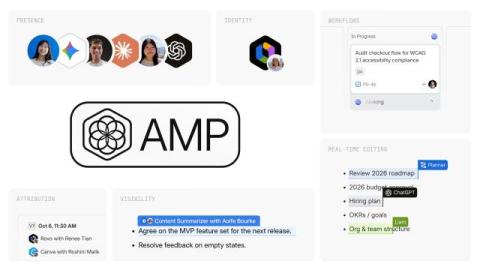
As organizations work to bring humans, agents, and automation together, teamwork is getting even more complex. If your AI strategy feels like a collection of one-off experiments layered onto disconnected tools and siloed knowledge, join Atlassian leaders to see how Teamwork Collection brings together Jira, Confluence, Loom, and Rovo into a connected foundation for human-AI collaboration at scale. Key takeaways: Watch the full Founder Keynote here.

Is AI flattening your team's creativity? Here's how to tell.

Think about your to-do list for a given work week. From responding to a colleague’s quick message to building a team strategy, how do you prioritize how much time and energy to allocate to each task? Behavioral science tells us most of us don’t optimize; we satisfice — we find the first “good enough” option, and we move on. The term, a mash‑up of “satisfy” and “suffice,” was coined by Herbert A.

Introducing Cursor in Jira

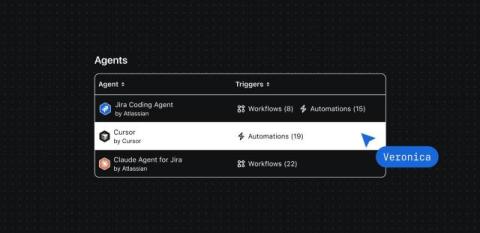
Starting today, Jira teams can assign work directly to Cursor, where a cloud agent will pick it up and begin working. You can steer agents directly from Jira, your IDE, or Cursor on the web. When Cursor needs input or is ready for review, it will notify you in Jira. When it opens a pull request, it will be automatically linked back to Jira.

The AI efficiency paradox: What to do when AI boosts productivity but not results

There’s a paradox happening with AI: Usage and productivity are up, but bottom-line results aren’t always as obvious. It’s a familiar pattern you might be seeing in your organization: Leadership invests in AI, and employees say they’re getting more done: more code, more campaigns, more analysis.