

Teams | Collaboration | Customer Service | Project Management

Rovo Search: Why Rovo is a Leading Enterprise AI Search Tool

TLDR: Key updates: Rovo Search now provides AI-generated answers with citations, routes intent-aware queries in Jira, searches across 50+ connected tools, delivers richer visual results, and is embedded directly in Atlassian workflows. This blog summarizes improvements that have shipped over the past year to Rovo Search. Rovo Search keeps getting better over time! It is now approximately 60% faster than six months ago!

Everyone agrees on the priorities. Almost no one can see the money and the work behind them.

Your transformation strategy is only as strong as its alignment with team execution and financial investment. Now you can see portfolio health in real time, intervene before initiatives drift, and tie every request and dollar to the priorities that matter. The latest Strategy Collection innovations bring financial investment, delivery risk, and cross-team demand into one view. The best part? Every capability covered has shipped since our previous Innovation Spotlight.

How Design Ops built an AI teammate with no engineering lift

Our Design Ops team supports more than 600 designers across Atlassian. And like most operations teams, we were seeing the same pattern over and over again: important questions landing in Slack, manual triage happening in the background, and too much useful knowledge trapped in docs that people either couldn’t find or didn’t have time to read. We built DOT, the Design Org Teammate, to change that.

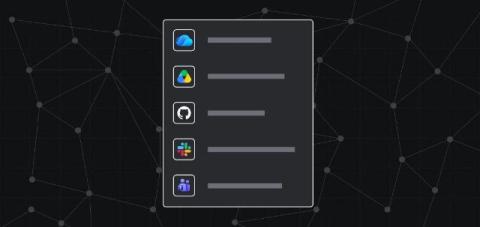
Turn knowledge in Google Drive and Microsoft SharePoint into connected context

Bring document knowledge you already have access to from Google Drive, SharePoint, and OneDrive into Rovo Search, Chat, and Agents so teams can move from questions to useful context faster. The project plan is in Google Drive. The financial model is in SharePoint. The work is tracked in Jira, and the decisions are documented in Confluence. Your team has the information it needs.

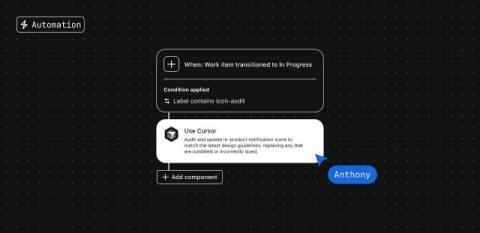
From prompts to orchestration: Scale AI coding agent impact with Jira Automation

Connect any coding agent to your system of record to automate engineering loops AI coding agents have made individual developers faster. But faster individuals working in their local environments do not automatically create faster engineering organizations. The bottlenecks that slow software delivery are usually systemic: work stalls in human queues, triage waits for idle cycles, and routine handoffs depend on manual intervention.

Shattering the service quo starts with context

AI is changing expectations for service. Employees want help that feels seamless. Customers want answers without long waits or repeated explanations. Operations teams want to get ahead of incidents and prevent disruptions rather than just respond. Those expectations rest on a critical dependency: context. AI is only useful when it can see the full picture – from people and knowledge to services, assets, and code – and all connections in between.

Inside AI Builders Week: How teams work in the AI era

Each quarter, we ask some of our R&D teams to take a week away from the day-to-day to experiment and innovate on AI. We call this AI Builders Week, and it helps fuel our AI transformation. In past quarters, we’ve focused on building for individual workflows — how do we each get faster and more productive by inserting AI into different parts of our daily to-dos?

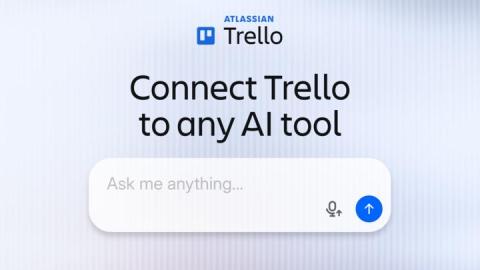
Connect Trello to Your Favorite AI Assistants with Trello MCP

Great ideas can start with a random spark at 2 a.m., grow through a planning session with ChatGPT, or take shape in a brainstorm with Claude. AI helps you plan, but getting that plan into Trello has always been a manual, momentum-killing process. Today, that changes. Trello now uses MCP (a shared standard that lets AI tools talk to apps like Trello) to connect with assistants like Claude, ChatGPT, Gemini, and Cursor. That means you can manage your boards, lists, cards, and checklists just by asking.

How Atlassian leaders are building a culture of AI-fluent teams

According to Atlassian’s 2026 State of Teams report, a growing gap has emerged: while AI makes individual tasks faster, many teams are struggling to keep that work aligned. In this panel discussion, Atlassian executives share an inside look at how they are operationalizing AI within their own departments to turn early experimentation into durable, connected ways of working.

"You Should Be A Little Uncomfortable": How Cursor Is Navigating the New Shape of Product Craft

Every week, it seems like the rules change for building products. We’re all figuring this out in real time, and one of the best ways we’ve found to do that is to sit down with other leaders who are in the thick of it. That’s why Atlassian recently started a series called AI Talks at our San Francisco offices with senior leaders building AI products. We break down what’s working, what’s broken, and what feels uncomfortable.