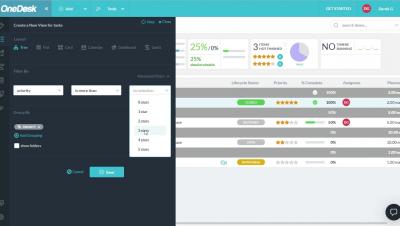


In today's modern workplace environment, providing a great workplace IT support helps define a positive culture of an organization. Once your employees are given proper support, the productivity increases, naturally. In a traditional IT support model, employees spend a lot of time writing lengthy emails or making long calls with the IT Helpdesk.
Data mining, unfortunately, has a very scary reputation. For example, social media companies have been able to use people’s social media activity to predict “political preference, personality score, gender, sexual orientation, religion, age, intelligence, along with things like how much you trust the people you know, and how strong those relationships are.”
OneDesk has lots of configurations to allow you to control the emails we send on your behalf. All these options can be fond under Administration > Email settings. These options include: You can control the content and appearance of the emails we send. All these changes can be made inside your account under: ADMINISTRATION > EMAIL SETTINGS > APPEARANCE
Non-profit organizations have to be savvy in knowing how being efficient with their funds. This translates further into needing efficiency in how work is managed and tracked. For non-profits that have been around for some time, there tends to be a lot of tired, old workflows that are not using the most effective software to do this management.
With more companies creating and expanding their customer success teams than ever before, it’s critical that leadership focuses on the right metrics to accurately gauge their work. Remember, this team isn’t just an extension of customer support, so common metrics like average ticket close time will fail at accurately representing their contribution to your company.
Online marketplaces offer a wealth of solutions for companies of all shapes and sizes looking to improve the quality, speed, and efficacy of their customer service and support experiences. But while marketplaces are an incredible resource with nearly limitless possibilities, they can be overwhelming, intimidating, and confusing if you don’t know what you’re looking for.
Some customers just want to be left alone. For them, never having to talk to the company or have any form of interaction with them, is the best possible experience. Forcing these customers to engage, is the very opposite of providing a good experience. Yet, companies have to keep working towards increasing customer engagement. So how do customer experience and customer engagement fit together? Are they the same thing? Turns out, they aren’t – but they do work together in perfect harmony.
If you are wondering if you can host your OneDesk customer portal, or other customer app, on your own domain, the answer is YES. Here’s how it is done.
Great companies have always cared about their customers. When a customer pays for a service or offering, it’s up to the company to make sure what they paid for meets their needs. In the past, this may have meant a follow-up call or two, and then the company moved on. However, as the B2B customer experience evolved, a single phone call is no longer good enough. Now, companies have entire “customer success” teams that focus solely on ensuring the customer is happy and remains that way.