Beyond buzzwords: How small companies are using AI, automation, and conversations to grow in 2022
For the first time in a long time, the world of tech, business, and media seem to be less focused on the pandemic and more focused on the future.


For the first time in a long time, the world of tech, business, and media seem to be less focused on the pandemic and more focused on the future.
If you’re not yet focusing on the customer experience with your organization, it’s time to get started and kick it into high gear. Customer expectations are higher than ever and evolving. You’ve got to get ahead of that. There are often challenges to getting a customer experience program off the ground in any organization, so let’s overcome those and get moving.
When it comes to optimising the customer experience (CX), your work is never really done. Consumer expectations are increasingly rising, and the world of technology is constantly evolving – making it difficult for business leaders to keep up.
Companies strive to keep up with the higher consumer expectations of minimum wait times, fast response, and resolution times. Live chat software is among the most potent customer communication tools any business has. Are you a business owner or head of product at a company? You probably have recognized the potential of customer service chat software.
Are you looking for ways to improve your business workflow? You need to start investigating workflow automation tools. With the right tool in hand, you can eliminate administrative tasks and focus on high-value customer-facing activities. Workflow automation is a powerful way to improve team productivity and unlock the growth potential of your small business. There has never been a more important time for businesses to embrace workflow automation tools.
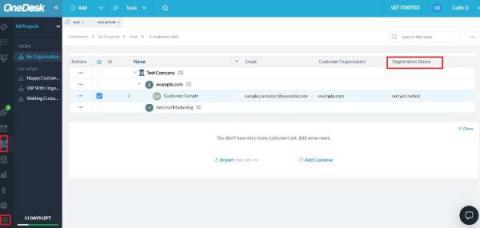
The OneDesk Customer Portal provides an easily accessible space for your customers to submit tickets and view the status of their items which your team is working on. To get started with the Customer Portal, customers must first be created in OneDesk and invited to register on the portal.
Whether it's to inform your sales or marketing teams, it’s likely that you’ve done lots of analysis on your customers to help determine exactly what they need and want. But have you ever analysed how your teams are interacting with your customers to inform service improvements? Learn more about how understanding your agent touches can benefit your business.
IT help desk agent productivity is a much-discussed subject, but one that few seem to actually get a handle on. But what are the basics when it comes to increasing the productivity of your service desk agents and still treating them with kindness and empathy? Today, we’ll find out. Plus, we’ll offer some common-sense tips to get you on the right track. If there’s one thing that we can take for granted in the world, it’s that customers need around-the-clock service.
Customer service representatives rely on their listening skills to understand how a customer feels about a product or service, to resolve customer complaints and to ensure customer satisfaction. However, the first step to active listening is hearing what customers have to say. But what’s the difference between the two? Customer Service listening skills involve not only noting down the words spoken by the customer, but also the nuances of the issue raised.
Brand awareness is a life-line for a small business. This means that customers recognize and trust the company. You don’t have to spend thousands on a marketing campaign to get noticed in the world. Instead, entrepreneurs and business owners need to focus on the details and make use of the internet. Consistently using the following seven tips will help a business make their way in the world.