

Teams | Collaboration | Customer Service | Project Management

The latest News and Information on Project Management, Methodologies, Productivity and Tools.

Understanding dependencies in project management

A project dependency is a task that relies on the completion of a different task. This article breaks down key terms associated with dependencies and the different kinds of dependencies you may see in project management. Much like a relay race, projects are often completed by passing tasks from one team member to the next. Unlike a relay race, some project tasks require other tasks to move forward before they can be started. This relationship between tasks is known as a dependency.


How Asana uses work management to optimize resource planning

Initiatives can’t succeed without the right resources. Nobody knows this better than Rita Khayat, Asana’s Head of PMO for Strategy and Operations. Khayat is responsible for keeping business-critical goals on track—which she does by allocating the right resources, at the right time, to the most important work. Khayat’s team is responsible for four main business areas within the CIO org: Resource management is essential for each of these areas.

How Asana uses work management for organizational planning

Rita Khayat is an expert at managing complex, company-wide programs. As Asana’s Head of PMO for Strategy and Operations, Khayat is responsible for keeping business-critical goals on track. She does this with clear processes, 20+ years of experience, and a knack for using Asana to its full potential. Khayat’s team is responsible for four main business areas within the CIO org: Together, these responsibilities span many different teams and require a high level of cross-functional coordination.

How Asana AI Studio helps content teams move faster

Content and creative teams know the struggle—coordinating across channels while maintaining a consistent message is hard. That’s why our content marketing team built an AI-powered editorial assistant using Asana AI Studio. It turns research reports into ready-to-use content outlines for every channel, instantly aligned to your brand voice. The result? Faster launches, less busywork, and more time to focus on creative innovation.

What's new in Asana | April 2025

Welcome to the April edition of What's New in Asana, Asana's monthly product update. First, edit a rule’s title, controls, and permissions from the rules settings sidebar. Next, add collaborators to help draft status updates before they are published. Finally, define, manage, and share company-specific terminology, acronyms, and technical jargon directly within Asana.

How to create a cross-functional team in 4 simple steps

A cross-functional team is a permanent or temporary group of people with different types of experience working together to achieve a common goal. Cross-functional teams benefit companies because when team members with multiple skill sets work together, they can pursue company goals more efficiently. In this piece, we’ll explain what a cross-functional team is and provide tips for how to build one.

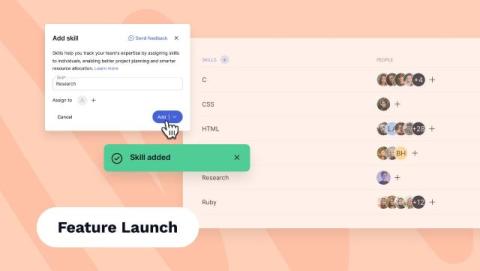
Match the right people to the right work with Skills

In the world of client work, it’s no surprise that your people are your biggest asset. But when you're juggling multiple projects, clients, and timelines, it can be hard to know if you’re using that asset wisely. Who has the right skillset to lead this new initiative? Who’s certified in Adobe After Effects? Do we have enough React developers available next week?

How Asana's AI Studio helps security teams beat alert fatigue

Struggling with alert fatigue? See how security and IT teams are using Asana’s AI Studio to cut through the noise and focus on what matters most. In this video, learn how Asana’s AI-powered workflows help teams triage faster, reduce manual work, and stay ahead of critical issues.

Program manager vs. project manager: Key differences

You may know what project management is, but have you ever heard the term program management? While the two sound similar, you might be surprised to learn there’s a lot that sets them apart. Whether you’re searching for the right role for your team or want to improve your work management processes and methodologies, we’ll help you understand the differences between a program manager vs. project manager.

How to calculate productivity: Which formula fits your team?

Is your team being productive or just busy? You might see tasks completed, hours logged, and meetings held. But are those things leading to real results? It’s tough to tell, especially when you’re managing a mix of remote, hybrid, and in-office workers. One employee looks active online all day, while another is quiet but always hits deadlines. This makes it harder to know who’s genuinely productive.