

Teams | Collaboration | Customer Service | Project Management

WhatsApp Cloud App Integration with Rocket.Chat

Rocket.Chat's Omnichannel apps enable you to connect with your citizens and customers through various channels, including WhatsApp. The WhatsApp Cloud app provides direct communication between Rocket.Chat and WhatsApp using the WhatsApp Cloud API without needing third-party services. In this video, you'll learn how to install and use the app in your workspace. Keep in mind that assignment of conversations to agents depends on your workspace's Omnichannel configuration and routing settings.

Managing Omnichannel Queue in Rocket.Chat

Rocket.Chat provides queue management settings for incoming Omnichannel conversations. This helps you set the queue behavior, as well as the agent and visitor experience. In this video, you'll learn about the configuration options, including waiting times in queues, sorting chats based on specific parameters, and the number of chats an agent can handle at once. Keep in mind that chat assignment also depends on your workspace's Omnichannel routing type and the routing settings.

Re-register Your Rocket.Chat Paid Plan

For Rocket.Chat premium plans. Registering Rocket.Chat workspaces with the Cloud portal is necessary to access various services. However, in cases like version update issues or database discrepancies, your workspace's registration may be lost. This video shows you how to register your workspace again if you encounter such issues.

Managing Your Cloud Hosted Rocket Chat Workspace

Rocket.Chat offers premium and dedicated cloud-hosting services so you can get your workspace running quickly, without the need to handle infrastructure yourself. Using Rocket.Chat's Cloud portal, you can view and manage your workspaces. If you are facing issues with your cloud-hosted workspace, you may need to restart it. In this video, you will learn how to restart your cloud-hosted workspace via the Cloud portal. Additionally, this video shows you how to update the workspace version from the Cloud portal.

Rocket.Chat Comms OS: Secure Communications for Government & Defense Teams

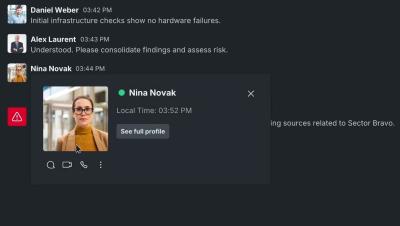
Rocket.Chat's Comms OS gives government and defense teams a secure communications platform they fully control - from infrastructure to access. See how teams use zero-trust, attribute-based access controls to manage sensitive channels, AI-driven summaries to capture key decisions from approved intel, and encrypted voice and video for real-time coordination when conditions change fast. Built for air-gapped and sovereign deployments. Federate securely across organizations with Matrix protocol.

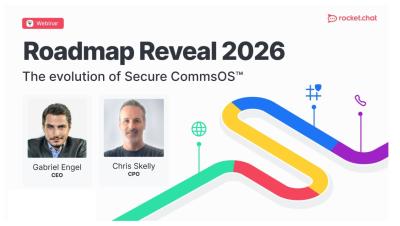
Roadmap Reveal 2026: The Evolution of Secure CommsOS | Rocket.Chat

Rocket.Chat CEO Gabriel Engel and CPO Christopher Skelly walk through the 2026 product roadmap for Secure CommsOS, covering what's ahead for real-time communications, federation, and Zero Trust capabilities. This session covers: Rocket.Chat is a DoD-approved, open-source communications platform built for defense, intelligence community, and federal agency environments. Secure CommsOS unifies messaging, voice, video, and AI into a single platform with full data sovereignty and compliance controls.

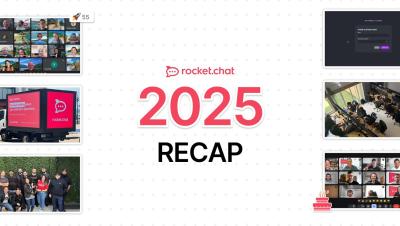
Rocket.Chat 2025 Recap

Before we get too far into 2026, we’re taking a moment to reflect on what brought us here: the commitment to show up, connect, and build together. This video highlights the moments and achievements that shaped our 2025 — and the collaboration that made them possible. As we continue building ahead, let’s keep dreaming, owning, trusting, and sharing in 2026. Interested in joining us in the future?

Rocket.Chat + Pexip: Integrated Secure Comms for Government

Standard IT tools weren't built for high-security environments—or for connecting seamlessly with mission partners across complex networks. In this session, experts from Rocket.Chat and Pexip explore how Federal Systems Integrators (FSIs) and defense agencies are modernizing collaboration without compromising on security. What you’ll learn in this webinar: Standard IT tools often trap data in silos, slowing down critical decision-making. We discuss how to move from legacy systems to air-gapped, mission-ready solutions that ensure total data sovereignty.