Teams | Collaboration | Customer Service | Project Management

How to Measure & Improve Employee Productivity in Healthcare

Understanding how to measure employee productivity in healthcare isn’t simple. It’s not just about counting how many patients you see or how many reports you complete. Unlike corporate environments, where productivity is tied to deliverables, in healthcare, it directly impacts patient care, safety, and satisfaction.

Best intranet platforms for the healthcare industry

Every day, healthcare professionals battle more than just medical challenges. They struggle with communication barriers created by shift schedules and scattered locations. They miss critical updates because traditional tools like email and bulletin boards can't reach them during patient care. They feel disconnected from their organization’s mission, leading to burnout that drives talented staff away and compromises patient safety.

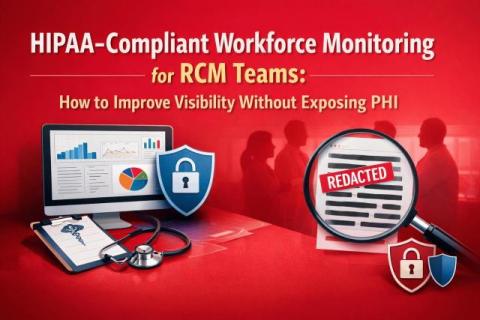
HIPAA-Compliant Employee Monitoring in Healthcare: Protect Sensitive Data

Monitoring employees in the healthcare sector has always been tough. However, maintaining HIPAA (Health Insurance Portability and Accountability Act) requires proper monitoring. Well, that’s another ballgame altogether! That’s why most businesses fail to be HIPAA-compliant and lose patient data! With the right monitoring software, your healthcare organization will stay compliant, protect sensitive information, and give managers real-time visibility.

The 9 Best Time and Attendance Software for Healthcare in 2025

Healthcare runs on people, and when staffing falters, patient care suffers. A missed shift, a late punch, or an unplanned absence leaves already overworked teams scrambling, which can compromise the quality of bedside care. Tracking your staff in a care setting is uniquely complex. Nurse managers and administrators have to juggle rotating shifts, credentialing requirements, and strict staffing-to-patient ratios that aren’t flexible when someone calls out.

AI in Healthcare: Statistics and Insights 2025 + Infographics

Working in healthcare has never been easy, but in 2025, the job feels heavier than ever. Clinics and hospitals are stretched thin. Staff shortages are everywhere – patients need more care, more nurses and doctors are burning out or retiring, and the demand for healthcare keeps climbing faster than the workforce can keep up.

A Therapist's Guide to HIPAA-Compliant Texting

Let’s be honest – sometimes one single message is the fastest way to show up for someone. Whether it’s about checking in on a patient’s progress, coordinating with a colleague, or responding to a sudden mental health concern, a simple text can make all the difference. Texting has naturally become a go-to communication channel, especially in today’s therapy, where speed and accessibility matter more than ever.

Building belonging in a hybrid workforce ft. Jim O'Gorman, CPO of Included Health

In this episode, we sit down with Jim O’Gorman, Chief People Officer at Included Health. With a workforce that spans clinicians, hourly care advocates, engineers, and corporate teams, Jim shares how his organization is rethinking connection and community in a complex, hybrid environment. Together with Simpplr’s Chief People Officer, Miriam Connaughton, they explore why belonging is critical to business success, how to move beyond outdated culture playbooks, and what it takes to build genuine connection at scale.

5 HIPAA ompliant Telehealth Platforms That Will Change Your Practice

As of 2025, nearly 80% of healthcare consumers have tried telemedicine at least once, and an astonishing 96% of telepsychiatry patients are happy with their virtual session. These numbers tell us how online healthcare is trending, but they don’t place the whole picture into perspective. Telehealth is climbing incrementally, yet it’s not displacing in-person visits at all.

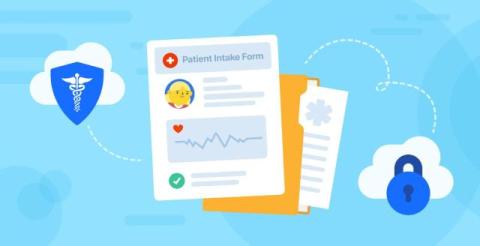
Master HIPAA-Compliant Forms That Help Your Team and Patients

There’s a special place in healthcare where time vanishes, nerves fray, and no one wins – paperwork. Intake forms, consent sheets, and feedback questionnaires. They’re essential, they save lives, and yet somehow they still feel like something invented in administrative purgatory. Doctors and medical staff don’t show up each day hoping to chase signatures or decode someone’s handwriting. But that’s the reality for many teams.