

Teams | Collaboration | Customer Service | Project Management

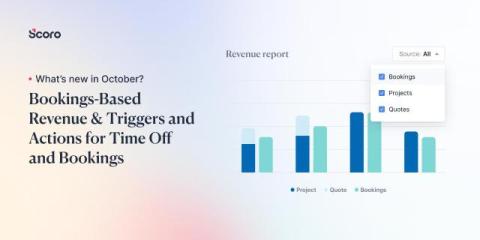
What's New in October 2026: Bookings-Based Revenue & Triggers and Actions for Time Off and Bookings

Is it already the end of October? Wow. Time truly flies when our team is busy working on updates. This month, there are tons of useful improvements for everyone! You can now see what your resource bookings are worth with the new bookings-based revenue, and set up automated rules about time off and bookings. And that’s not all – from task dependencies in the project task list to subtasks in task bundles, there’s plenty more below.

WTF Is an MCP Server? (And Why You Should Care)

So, MCP servers. You’ve probably heard about them by now. Maybe someone mentioned them in a meeting, you read about them on LinkedIn, or one popped up in a product update from one of the tools you use at work. And maybe you nodded along like you knew what it meant. No judgment. We’ve all done it. (I’ve done it more than I’d like to admit.) But the problem is, most explanations of MCP servers I’ve read are written by developers, for developers.

5 Best Project and Resource Management Software for 2026

When you run operations at a services firm, the schedule often says one thing and the timesheets say another. Margin only shows up after the month closes, and finance waits on project managers for invoicing data. Every tool in this list can plan projects and schedule people. Where they differ is how far they connect that plan to costs, margin, and billing.

AI Resource Management for Operations Leaders

Resource management is mostly admin. Checking who’s overbooked, finding cover when someone’s off, or moving every date when a client slips. AI can now take on a lot of that work, from answering questions about your schedule to actually making the changes. This guide covers what AI in resource management usually handles today, and the data it needs before you can trust it to reschedule your people.

Architecture Project Management Software: A Practical Comparison of 6 Tools

Architecture firms often start with a basic project tool and spreadsheets. But as projects and teams grow, this setup becomes harder to manage. Budgets, timesheets, schedules, and invoices may be spread across different tools. This makes it harder to track project performance without manually checking and matching the data. For a principal, the cost often becomes clear too late. A design stage may exceed its budget, but you only find out when the project closes.

The FinOps Playbook: Closing the Gap Between Finance and Ops

Revenue is up, but profits aren’t. If that sentence feels familiar, it doesn’t mean there’s a problem with the work itself. The problem usually lies with how the people running the business are working together. This shows up most clearly in a disconnect between finance and ops. Instead of working side by side, they’re solving different puzzles in different rooms. And most likely using different data sets. That gap in collaboration is how margin leaks can go unnoticed.

How to Audit Your Tech Stack: A 5-Step Guide

Most firms know they’re paying for tools they don’t fully use. What they don’t know is how to fix it. That’s why we created the Tech Stack Audit Workbook. It includes: It also generates a leadership summary that suggests next steps based on the info you enter. Best of all, the audit only takes about 90 minutes to finish. Let’s walk through it.

What's New in September 2026: Scoro Time Mobile App for Time Tracking & ELI Improvements

Your desktop is no longer the only place to log time – you can now do it straight from your phone with the new Scoro Time mobile app. We’ve also grown ELI’s capabilities – put ELI to work reading files, filtering list views for you, and running automations for you when certain trigger conditions are met. And that’s not it – there’s a lot more below!