
Enterprise Service Management (ESM) is a powerful and dynamic approach that empowers organizations to streamline support processes and elevate employee experience. As such, implementing an ESM strategy is paramount to remain competitive and align service delivery with overarching company goals. Because the key concepts of this practice build on IT Service Management (ITSM) principles, the tools adopted were originally designed for this field.
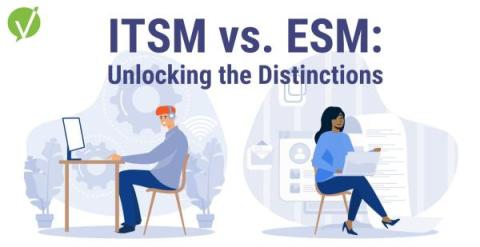
In this article, we’ll take a deeper look into ITSM and ESM, exploring how they impact diverse business verticals and, more importantly, why integrating both could be a game-changer for your organization. In the constantly evolving arena of service management, gaining a clear understanding of the fundamental distinctions between Enterprise Service Management (ESM) vs. IT Service Management (ITSM) is crucial.
With mobile devices becoming ever more frequent in everyday work operations, ITSM solutions are incorporating a mobile help desk alternative to attend to the needs of remote support and faster ticket resolution. Both agents and end-users stand to benefit from its accessibility and enhanced operations. However, to work properly and encourage effective adoption, these solutions must include certain key features.
At the basis of workflow automation lies a simple premise: employees don’t need to do repetitive tasks manually. And there’s a reason for that: 57% of IT leaders say that automation technology saves 10-50% on the business costs associated with manual processing. The scope of possibilities offered by automation is wide and can be tailored to many different areas of practice.
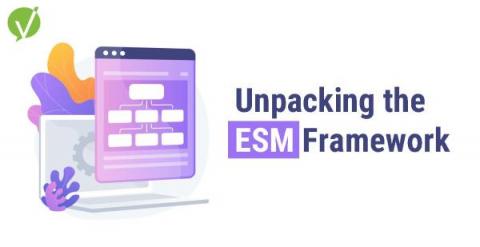
Efficiency and agility are the linchpins of business success, the demand for streamlined processes is more significant than ever. Enter the Enterprise Service Management (ESM) framework: a strategic tool designed to optimize organizational processes and bring order to the chaotic world of business operations. In this piece, we’ll delve into the key components of ESM, its benefits, and how it fosters cross-departmental collaboration.