

Teams | Collaboration | Customer Service | Project Management

Zero Trust Security: Principles, Benefits & Implementation

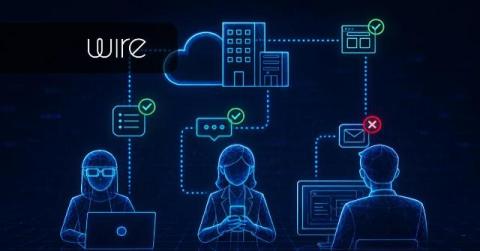
Zero trust security is a cybersecurity approach that requires organizations to verify users, devices, and applications before granting access to sensitive resources. As enterprises adopt cloud services, support remote employees, and collaborate with other departments and external partners, security teams have to manage more identities, devices, and access points. Zero trust helps with that.
ABAC in collaboration: the last mile of Zero Trust

How Rocket.Chat and Virtru close the security gap in classified collaboration with attribute-based access control (ABAC). In a classified operation, the person who had access to a room when they joined it may not be the person who is authorized to be there right now. Clearances change. Program assignments change. People rotate on and off missions, on base and off base, sometimes overnight.

When Trust Becomes a Threat: The SonicWall Breach and the Case for Zero Trust Security

A recent security incident has raised serious concerns across the IT industry. Firewall vendor SonicWall confirmed that all cloud backups of its customers’ firewalls were stolen in a large scale breach. What was initially described as a limited issue has now turned into a data leak affecting every organization that used SonicWall’s cloud backup service.

Federal zero trust strategy: are you ready?

Federal agencies deal with sensitive data and critical infrastructure while executing their public functions. They are naturally vulnerable to malicious attacks and data breaches. While strategic use of technology and cloud-based systems is important to delivering their mission, security monitoring is crucial. The federal zero-trust strategy calls for a holistic approach to protecting data and systems. Doing so helps mitigate safety concerns and service disruptions.

The three elements of a security-first architecture

The upheaval of this past year has revealed how vulnerable global systems are to cybercriminals and bad actors. Cyberattacks have surged, with a reported 400% increase in attacks since the pandemic, and a 278% increase in leaked U.S. government records. However, cyberattacks didn’t just increase in terms of volume, they also grew in scale, potency and wide impact, particularly in the public sector.