

Teams | Collaboration | Customer Service | Project Management

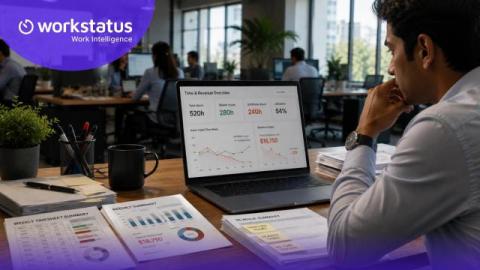
Why Busy Teams Still Lose 15-30% Profit Margins

It is one of the most frustrating paradoxes in professional services. Your team is working around the clock. Calendars are packed. Slack is buzzing. Everyone is exhausted. Yet when the quarter closes and financial results arrive, the story is different. Profit margins are thin, flat, or shrinking even with high billable work. The most profitable agencies are not the busiest ones. They are the ones who clearly understand how time, effort, and resources convert into revenue.

Workforce Intelligence Explained: Turning Work Data into Business Outcomes

Can workforce data actually help businesses grow? With work intelligence, organizations can transform everyday work data into actionable insights that improve productivity, workforce planning, and overall business performance. In this blog, you’ll explore how the workforce intelligence tool works and how it helps businesses turn work data into measurable outcomes. Let’s go!!

How IT Services Teams Track Time: Insights from 84M+ Hours Logged

Time Tracking sounds simple: But in reality, every IT service team tracks time differently based on how their teams work. A small agency tracks time differently from a large enterprise. A field team works differently from a remote software team. But every business is trying to answer the same question: Where does the time go? And how does it affect productivity, delivery & profits?

IT Services Utilization Benchmarks: Are You Above or Below Profitability?

Ever feel like your team is busy, but profitability is still inconsistent? This is a very common challenge for many IT service teams: they work at full capacity, yet the stronger margins don’t always follow. In service businesses, utilization plays a very important role in profitability.

Operational Intelligence vs Traditional Workforce Reporting

Most organizations have access to a large amount of workforce data. They track: Yet operational problems still happen. The problem is not a lack of data. The problem is that traditional workforce reporting mainly looks at the past. Modern operations need visibility into what is happening right now. This is why more organizations are adopting operational intelligence software.

How Productivity Intelligence Reduces Project Overruns

Project overruns remain one of the biggest challenges for service businesses. A project may appear to be running smoothly for months before delivery starts slipping. This is a common challenge faced by service businesses. Projects begin with realistic budgets, planned timelines, and carefully allocated resources. Yet many still end up delayed, over budget, or less profitable than expected. According to the Project Management Institute (PMI), 43% of projects exceed their original budgets.

Why Employee Monitoring Fails to Solve the 30% Margin Leakage Problem?

Have you ever given a thought to why project margins keep reducing even when everyone is busy? This is because being busy doesn’t guarantee equal results. Employee monitoring can tell you who is working and for how long, but it fails to tell where time, effort, and profits are being lost. In this blog, you’ll explore why employee monitoring fails to solve the 30% margin leakage problem and how service businesses should switch to productivity intelligence instead. Let’s go!!

How AI Workforce Intelligence Improves Delivery Margins

For many service organizations, delivery margins are under constant pressure. Projects become more complex. Client expectations increase. Teams work across multiple locations. Yet leaders are still expected to deliver projects on time, control costs, and maintain profitability. The challenge is that margins usually decline due to several small issues and not a single major issue. It happens through dozens of small operational inefficiencies: Most organizations already have access to workforce data.

Time Intelligence: How to Turn Time Data into Smarter Business Decisions

You track hours all day, but still lack real-time visibility into how that time affects Without Time Intelligence, important work patterns stay hidden, making it difficult to make informed decisions. And you most often face: Read this blog to learn what Time Intelligence is, why it matters, and how it helps you make smarter decisions using time data.

The Complete Guide to Scope Creep: How to Catch It Before It Eats Your Project Margins

Your project started with a clear scope, timeline, and budget. Then came a few extra requests, additional revisions, and last-minute stakeholder inputs. Individually, they seemed manageable. Together, they added more hours, stretched resources, and increased costs without increasing project revenue. That’s how scope creep often unfolds. It rarely starts with a major change. Instead, it grows gradually until deadlines slip, workloads expand, and project margins begin to shrink.