
Teams | Collaboration | Customer Service | Project Management

How Asana scales one idea into a full content engine with AI

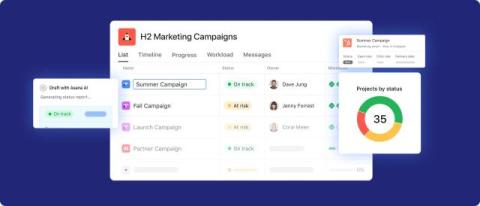
Stephanie Bui, content marketing strategy lead at Asana, used to think about her role in straightforward terms: managing content calendars, overseeing assets, and running a team. That framing worked when each idea lived in one or two places, like a gated asset or a blog post. The work started with one strong idea and ended when it shipped. AI changed all of that. A single idea ending at one asset was no longer enough. "AI raised expectations," says Steph.

Inside the Build: How Asana makes complex rules work everywhere

A growth marketing team builds an intake rule in Asana that handles their repetitive tasks. The rule handles every incoming request: One branch for high priority requests spins up and assigns subtasks so that the team can get straight to work. Another for medium-priority tasks uses AI to summarize the request and suggest next steps. A third routes low-priority requests to the team's backlog with a due date. The rule is complex, and it works beautifully. Then the sales team wants to use it too.

How Asana takes creative production briefs from one week to same-day execution with AI teammates

When Aubrey Rogers, Head of Creative Operations & Production at Asana, kicks off a new creative campaign, she doesn’t start with execution. First, she needs to understand what’s happening and why. This often means a team kickoff, go-to-market decks, and streams of back-and-forth conversations happening on multiple platforms. In theory, Rogers should have everything she needs after kickoff. She’s defined the strategy and aligned stakeholders.

Asana app in ChatGPT: go from ideas to action

You just spent 30 minutes in ChatGPT working through an idea — outlining a campaign, mapping out next steps, pressure-testing a plan. It’s clear, structured, and actually feels ready to go. Now what? Copy it into your team’s tools? Recreate the work, assign owners, figure out where everything lives, and get everyone aligned? The thinking and ideation part is solved. The coordination and execution part isn’t. Real work doesn’t stay with one person.

Asana catches security risks before anyone writes a line of code with AI Teammates

Security is what makes it possible to build and ship software with confidence. But in fast-moving engineering teams, it can drift into an afterthought—a final hurdle before launch rather than a voice at the table from day one. Varun Prusty, staff security engineer on Asana's security architecture team, believed it didn't have to work that way, so he built something to prove it.

How one marketer saved 4 hours of manual work with AI Teammates

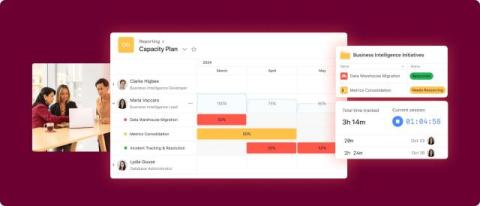
The hardest part of a planning offsite isn't always the planning. It's translating that clarity, energy, and momentum into actual projects after everyone has left the room. For Sheila Head, Head of Marketing Operations at Asana, that translation work used to cost an entire work day. "The real work happens as soon as you wrap up the notes and assign action items and get people actually working on the initiatives you all aligned on," said Sheila.

Asana vs. Trello: A Comprehensive Guide to Choosing the Right Project Management Tool for Your Growing Team

In the evolving landscape of project management tools, teams often find themselves at a crossroads: choosing between the simplicity of Trello's digital sticky notes and the orchestrated work management offered by Asana. This guide aims to provide a comprehensive comparison, helping SMBs, growing teams, and technical leaders make an informed decision.

Roadmapping in Asana as a Growth PM at Asana

In this blog article, hear from Adam Higa, Growth PM at Asana. I’m a Growth PM at Asana, and yes — I use Asana to build features for Asana. Very meta, I know. But being both a user and builder gives me a unique perspective on what works. I’ve developed a system with Asana that keeps me focused on outcomes, not just shipping features. Given it’s January, I wanted to share three tips for how I approach roadmapping and OKR planning in Asana.

Turn your conversations into coordinated work with Asana AI connectors

Great ideas start in AI tools. With 87% of employees now using AI at work,* teams brainstorm ideas, shape plans, get quick context, and move fast with the help of AI every day. And they're not waiting for official company AI rollouts either—only 31% of organizations have an AI usage policy in place.* As a result, work is no longer happening in one place. Employees jump between AI tools and their existing tech stacks, scattering tasks, content, and thinking across them.