Teams | Collaboration | Customer Service | Project Management

Streamline content creation at scale with AI Studio

Content marketing is a lot like running a relay race where success hinges on perfect handoffs. Writers and editors pass off to creative, creative to design, design back to editorial, and finally editorial to channel owners like social media managers or the web team. Each transition is critical to winning audience attention, the ultimate prize in today's highly competitive digital landscape.

Multitasking doesn't work-here's what does.

Multitasking is actually task switching in disguise. When you try to do two things simultaneously, you're really just shifting your attention back and forth, paying for it in time, accuracy, and focus. Even if you’ve heard that multitasking is a myth, it can feel productive. But the science behind multitasking is clear: the brain isn’t built to do two things simultaneously. You're just task switching, which decreases focus and leads to more mistakes.

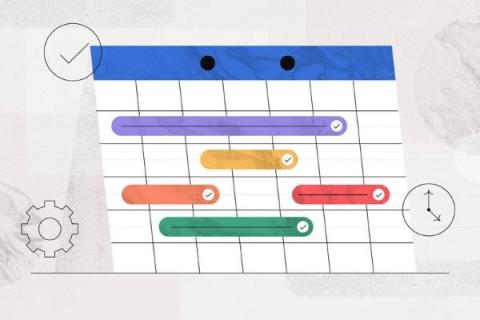
Guide to waterfall methodology: Free template and examples

Waterfall project management is a sequential project management methodology that's divided into distinct phases. Each phase begins only after the previous phase is completed. This article explains the stages of the waterfall methodology and how it can help your team achieve their goals. Project managers have many different types of project management methodologies to choose from. There's Agile project management, Kanban project management, Scrum, and many more iterative processes that you can use.

Project deliverables: What are they in project management?

Every project has an objective. Whether you’re making some updates to your website or building the next Eiffel Tower, you and your team are working towards something. Ultimately, running a successful project means having something to show for it at the end of the project’s timeline, whether that’s a tangible thing—like a new product or an ebook—or an intangible thing—like a decrease in customer churn or increase in NPS score.

How to conduct a stakeholder analysis (+ free template)

Think of your project as an Oscar-nominated movie. You won, and you have to go up and give your big speech. Who do you thank? In project management, those people would be your project stakeholders—people who have a stake in your project and have helped you get there in some way. Project stakeholders can vary from the people doing the work to the people approving the work to the people you’re doing the work for, but they’re all important.

How Asana's AI Studio helps our culinary team work smarter

What do chefs and AI have in common? At Asana, they’re working together to solve a real workplace challenge. Our in-house culinary team was fielding growing requests for nutrition info—and manually calculating every meal wasn’t scalable. With Asana AI Studio, we built a workflow that generates accurate nutrition data automatically, so the team can keep cooking and employees can make informed choices.

Fix these common onboarding challenges to boost productivity

The data doesn’t lie—a good onboarding process leads to happier, more productive employees. But while onboarding can increase retention rates by 82%, only 12% of employees strongly agree that their organization does a great job of onboarding new hires. Creating a smooth onboarding process is challenging, so it’s not surprising that some organizations fall short. But it doesn’t have to be that way.

Understanding dependencies in project management

A project dependency is a task that relies on the completion of a different task. This article breaks down key terms associated with dependencies and the different kinds of dependencies you may see in project management. Much like a relay race, projects are often completed by passing tasks from one team member to the next. Unlike a relay race, some project tasks require other tasks to move forward before they can be started. This relationship between tasks is known as a dependency.