
Teams | Collaboration | Customer Service | Project Management

The COO's Guide to Measuring ROI with Workforce Analytics

Most COOs can tell you their revenue per employee. Far fewer can tell you why that number moved last quarter, or where it is heading next. Workforce decisions made without data carry a real and recurring cost, including avoidable turnover, idle headcount, overtime bleed, and compliance exposure, all of which only show up once it is too late to act on them.

5 Hidden Productivity Killers in BPO Operations (And How to Fix Them)

Your agents are logged in. Your dashboards are green. Your reports say utilisation is at 82%. Yet SLAs are slipping, CSAT scores are dipping, and your best team leads cannot explain where the hours are going. This is the central paradox of BPO productivity: the losses that hurt you most are the ones that never show up in your standard reports.

How to Track Employee Productivity in a Hybrid Work Environment

Your in-office employees are visible. You can see when they arrive, when they step away, and how long they stay. Your remote employees are not. Yet you are expected to evaluate both groups with the same level of accuracy and fairness. For most managers running hybrid teams, this is not a hypothetical concern.

Aux Time Explained: What It Is, How to Calculate It, and How to Reduce It

Aux time is one of those metrics that every contact center tracks but relatively few manage with precision. The number sits in dashboards, gets flagged during reviews, and shows up in WFM reports. But without a clear picture of what is driving it, aux time stays a symptom rather than a signal. This guide covers the definition, the formula, the benchmarks, the causes, and the practical steps you can take to get it under control.

Application Usage Monitoring: What to Track, What to Block, and How to Stay GDPR Compliant

The average knowledge worker opens more than nine applications a day, and IT has full visibility into perhaps half of them. The rest are personal cloud accounts used to share client files, free SaaS trials that never reached procurement, browser extensions installed without an admin password, and consumer messaging apps standing in for sanctioned tools. Some are productive. Some are wasted licence spend. Some are a breach waiting to happen.

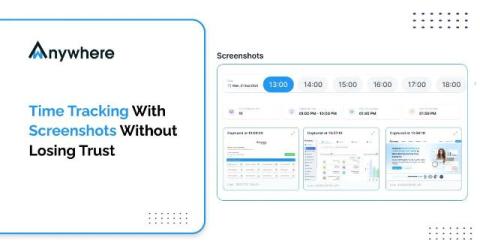
Screenshots and Insider Threat Detection: Findings & Best Practices

The hardest breaches to detect are not the ones at the perimeter. They are the ones already inside it. By the time most security teams identify a malicious or negligent insider, the data has moved, the credentials have been reused, and the forensic trail has degraded. Industry research now puts the average dwell time for insider incidents at well over two months, a window long enough for a single misuse event to escalate into a regulated disclosure.

The CISO's Checklist for Deploying Employee Activity Tracking Software Ethically and Securely

Employee activity tracking software has become a non-negotiable security control for distributed teams. But CISOs deploying it now sit at the intersection of three competing pressures: the security team needs telemetry to detect insider threats, HR needs to preserve employee trust, and Legal needs documented compliance with GDPR, ECPA, and state-level statutes. Most deployments fail at least one of those three. Some collect activity data the DPIA cannot justify.

Screen Monitoring Software for Remote Teams (2026 Guide)

Remote work has changed how companies manage productivity, security, and compliance.Teams are no longer sitting in one office with visible workflows and easy oversight. Today, leaders need a better way to understand what is happening on employee screens without creating unnecessary friction. That is where screen monitoring software comes in. The right solution helps organizations improve accountability, protect sensitive data, and maintain audit-ready visibility across remote and distributed teams.

Reactive vs Proactive Compliance: What BPOs Are Doing Wrong

In BPO environments, compliance failures do not always begin with a major incident. They often start with small, unnoticed gaps that build up over time. That is why the difference between reactive vs proactive compliance matters so much. Reactive compliance waits for an audit, complaint, or breach before action is taken. Proactive compliance uses real-time compliance monitoring and immediate alerts to stop risks early.